Stress has a way of lingering even when nothing urgent is happening anymore. I can be sitting on the couch, eating dinner, or getting ready for bed while my mind is still processing deadlines, conversations, unfinished tasks, and everything I need to handle tomorrow.
Instead of expecting that tension to disappear on its own, I use a simple evening routine for stress recovery to create a clear transition between being productive and actually winding down. In about 20 minutes, I focus on three things: clearing mental clutter, releasing physical tension, and lowering stimulation around me.
That approach feels realistic for busy US professionals, remote workers, parents, and anyone whose evenings often become an extension of the workday. I am not trying to build a perfect nighttime routine. I am simply giving my mind and body enough cues to recognize that the demanding part of the day is over.
Why Does Stress Follow Me Into the Evening?
Work stress does not automatically stop when work ends. After hours of meetings, deadlines, commuting, notifications, and constant decision-making, I may still feel physically alert even when I am mentally exhausted.
Stress activates the sympathetic nervous system, often described as the body’s “fight or flight” response. Relaxation practices can support the opposite parasympathetic, or “rest and digest,” state. I do not think about this as forcing myself to relax. Instead, I gradually reduce the signals that tell my body and brain to stay switched on. This can be especially helpful for social exhaustion recovery after a day filled with meetings, conversations, messages, and other interpersonal demands.
That is why a predictable evening wind-down routine can feel more effective than jumping directly from work into television, social media, household chores, or more email.
What Is the Best 20-Minute Evening Routine for Stress Relief?
I prefer dividing my evening stress recovery into three manageable phases. Each one solves a different problem: mental clutter, physical tension, and environmental overstimulation.
Phase 1: How Do I Mentally Close the Workday in 5 Minutes?
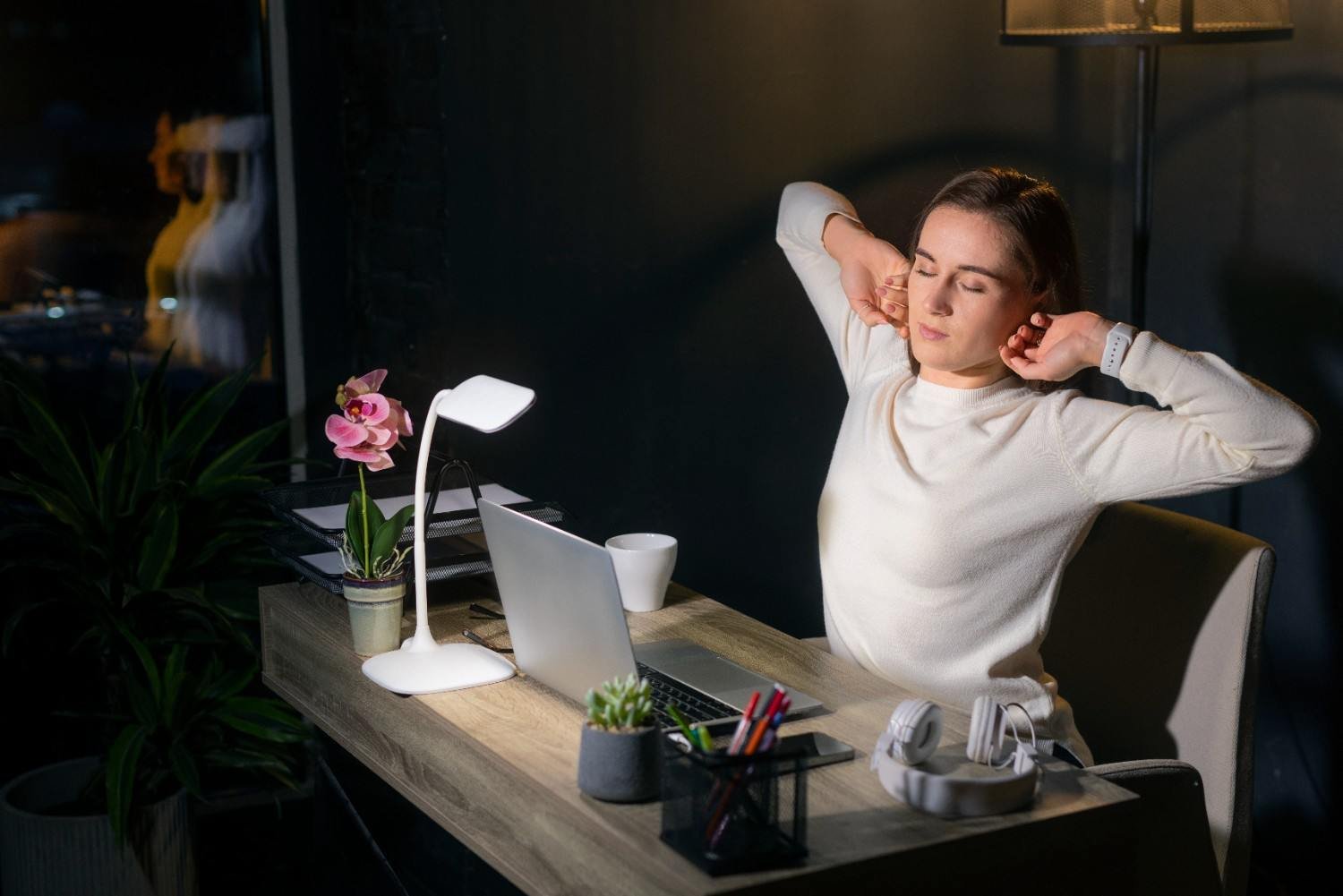
I start by creating a definite end to work.
If I still have unfinished tasks running through my mind, I spend two or three minutes writing them down. I call this a brain dump. I note tomorrow’s priorities, reminders, concerns, and anything I do not want to keep mentally rehearsing.
I do not try to organize every thought. The goal is simply to get it out of my head.
Then I shut down my work computer, close email, silence nonessential work notifications, and physically leave my workspace when possible. If I work from home, I may change clothes or walk into another room to create a stronger boundary between work and personal time.
I also avoid keeping my phone charger beside my bed whenever late-night scrolling becomes a problem. Small digital boundaries can make it easier to stop treating the evening like an extension of the workday.
Phase 2: How Can I Release Physical Stress in 10 Minutes?
Once I have mentally ended the day, I focus on physical tension.
A warm shower is one of my favorite transition rituals because it gives me a clear sensory break from the day. I intentionally slow down instead of rushing through it. Even something as simple as washing my face carefully or taking a few calm breaths can help make the transition feel deliberate.
Afterward, I spend about five minutes doing gentle movement.
I may stretch my neck and shoulders, loosen my hips, do a few easy yoga poses, or lie down with my legs supported against a wall. I treat legs-up-the-wall as an optional restorative position rather than a magic stress cure. What matters most is choosing a comfortable posture that helps me stop bracing and release tension.
Sometimes I prefer a short walk, especially after spending most of the day sitting at a desk. The goal is not exercise intensity. This part of my relaxing evening routine is about signaling that I no longer need to move at workday speed.
Phase 3: How Do I Create a Calmer Evening Environment?
The last five minutes are about reducing stimulation around me.
I dim harsh overhead lighting and switch to softer lamps whenever possible. Lower evening light exposure can support the body’s natural circadian signals as bedtime approaches.
I also lower digital stimulation. I do not always eliminate screens because that is not realistic for everyone. Instead, I stop checking work email, avoid stressful news when I can, reduce unnecessary notifications, and choose quieter content.
Bedroom temperature also matters. Many sleep experts recommend a relatively cool sleeping environment, often somewhere around the mid-to-upper 60s Fahrenheit, although personal comfort varies. I focus less on hitting one exact number and more on avoiding an overheated room.
These environmental cues help turn an ordinary evening into a more intentional nighttime relaxation routine.
How Do I Stop Thinking About Work Before Bed?
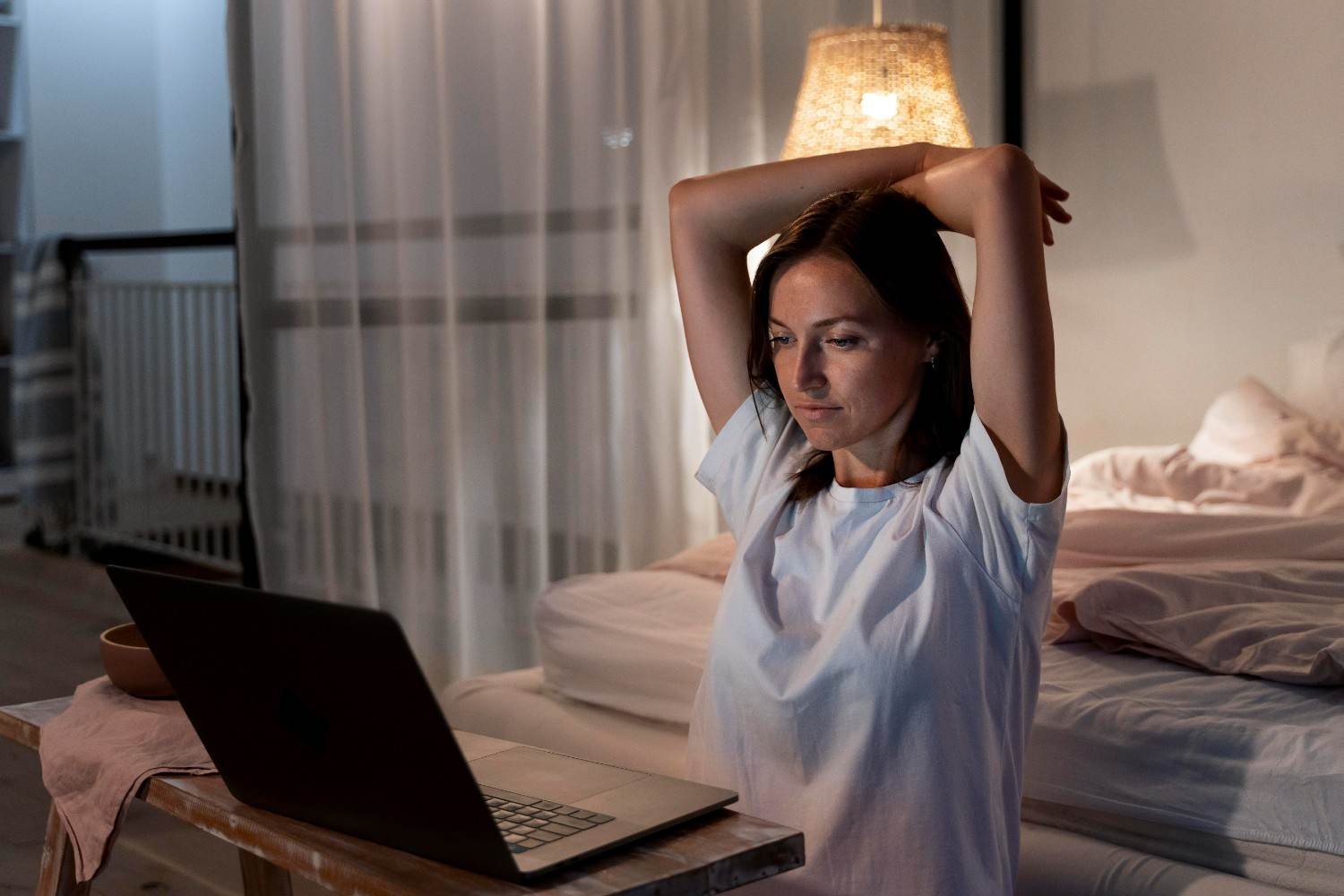
When my thoughts keep circling back to work, I return to cognitive offloading.
I write down the problem, identify whether I can actually do anything about it tonight, and decide what the next action will be tomorrow.
That final step matters.
Instead of telling myself, “I need to stop thinking about this,” I give the thought somewhere to go. Once the next step is recorded, I find it easier to release the mental loop.
I may then read a few pages of a book, listen to quiet music, stretch, or practice slow breathing. I especially like making my exhale slightly longer than my inhale because it naturally encourages me to slow down.
What If I Only Have 5 Minutes to Decompress After Work?
Some nights, a complete 20-minute routine feels unrealistic.
When I am exhausted, I use a five-minute version instead. I write tomorrow’s most important tasks, close work apps, stretch my shoulders and neck, take a few slow breaths, lower the lights, and put my phone on silent.
That is enough.
The purpose of a simple evening routine for stress recovery is not to create another standard I have to meet. A short routine that I can repeat consistently is more useful than an elaborate routine I abandon after a few days.
What Should I Avoid When Trying to Relax at Night?
The biggest mistake I make is confusing distraction with recovery.
Scrolling social media while answering work messages, watching stressful news while thinking about tomorrow’s schedule, or completing several chores at once may feel like downtime, but my attention is still being pulled in different directions.
I also avoid turning self-care into a productivity project. I do not need ten nighttime habits, a perfect journal, or an hour-long wellness routine.
Stress recovery works better for me when the evening becomes progressively quieter rather than increasingly structured.
How Can I Make an Evening Wind-Down Routine Stick?
I keep the sequence consistent but flexible.
My basic pattern is simple: close the workday, release physical tension, lower stimulation, and choose one quiet activity.
On an easy evening, that may take 20 or 30 minutes. On a difficult one, I may only manage five.
Repeating the same general sequence creates familiarity, and familiarity makes the routine easier to follow without relying on motivation.
Frequently Asked Questions (FAQs)
1. How long should an evening stress recovery routine take?
Around 20 minutes can be enough for a practical daily routine, although there is no perfect duration. Even five minutes can help create a clearer transition between work and rest.
2. What is the quickest way to decompress after work?
I start by writing down unfinished tasks, shutting down work notifications, and doing a few minutes of gentle movement. That combination addresses both mental and physical tension.
3. Is a warm shower good for stress relief at night?
A warm shower can be a useful transition ritual because it encourages a slower pace and may help relax tense muscles before bedtime.
4. Is legs-up-the-wall good before bed?
Some people find the position comfortable and relaxing, especially after standing or sitting all day. I treat it as an optional restorative stretch rather than something everyone needs to do.
5. Should I completely avoid screens in the evening?
Not necessarily. I find it more realistic to reduce stimulating screen use, especially work email, stressful news, and endless scrolling, rather than expecting complete digital isolation.
Conclusion
I do not need an elaborate self-care routine to recover from a stressful day. I need a clear stopping point.
By mentally closing work, gently moving my body, taking a warm shower, reducing digital stimulation, dimming the lights, and creating a cooler, calmer sleep environment, I can gradually shift from productivity mode into recovery mode.
The best simple evening routine for stress recovery is the one I can actually repeat. Twenty minutes is useful when I have the time, but five intentional minutes can still make the evening feel noticeably different.