The first time I tried to cue every movement in a vinyasa class, I talked faster than anyone could breathe. Students were still stepping forward while I was already describing the next pose. The class became easier to follow when I gave each transition one clear breath cue and left room for people to move at their own pace.
That is the purpose of vinyasa yoga breath to movement cueing: to help students use breathing as a steady rhythm for movement. It does not require everyone to breathe at the same speed. A useful cue tells students when to begin, where they are going, and how to adjust if the transition takes longer than one breath.
Start With a Simple Breath Pattern
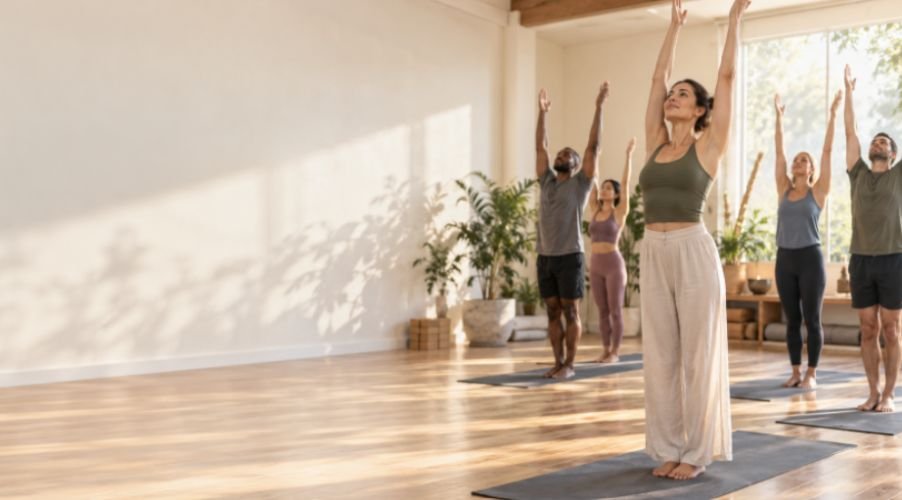
In many vinyasa sequences, an inhale accompanies a movement that lifts or lengthens the body, while an exhale accompanies a fold, a step, or a movement toward the floor. For example, a teacher might say, “Inhale, reach your arms overhead. Exhale, fold forward.” ACE describes this link between breath and movement as a defining feature of vinyasa yoga.
Treat that pattern as a teaching tool, not a rigid rule. Some movements take more time than a comfortable breath allows. Stepping from Downward Facing Dog to a lunge may require an extra inhale or exhale, especially for someone learning the transition. Let students breathe naturally while they arrive, then offer the next cue.
Put the Breath Before the Action
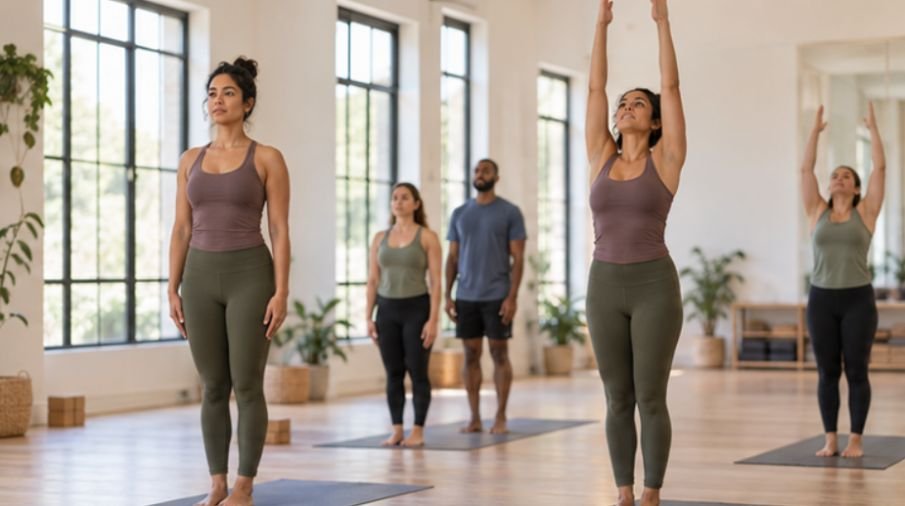
Students need to hear a cue before they can act on it. “Inhale, lift your chest halfway” gives them a moment to begin breathing and moving together. If you describe the pose first and add “inhale” at the end, they may already have completed the movement.
Keep the first cue short. Once students have arrived, add a useful detail: “Keep your knees soft,” or “Press through both feet.” This gives them a clear path into the pose without making them hold their breath while listening to a long set of instructions.
A practical pattern is breath, action, destination. You might say, “Exhale, step your right foot back into a lunge.” Students hear the breathing cue first, the movement second, and the landing point last.
Teach One Transition at a Time
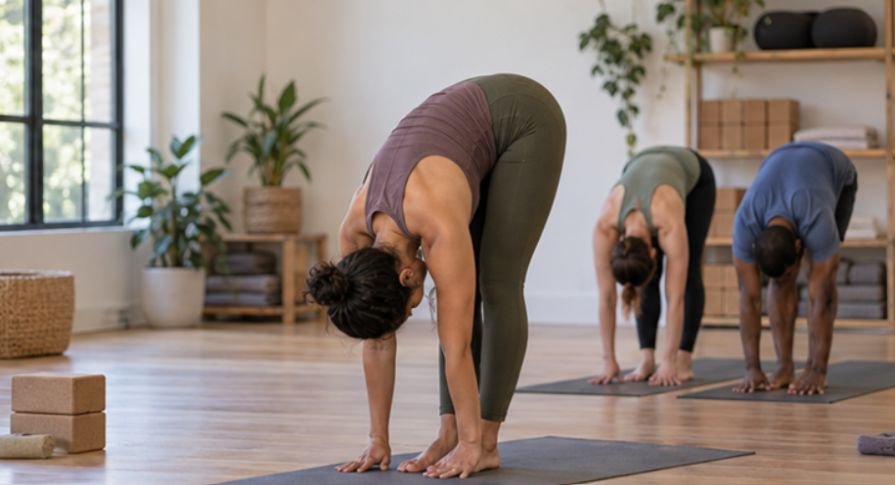
A short sequence offers a good place to practice:
“Inhale, sweep your arms up. Exhale, fold over your legs. Inhale, lift your chest halfway. Exhale, place your hands down and step back. Take a comfortable breath in Downward Facing Dog.”
This wording gives each movement a clear start. It also creates a pause after a demanding transition. In a real class, I would watch students before continuing. If several people are still stepping back, I would give them time to settle rather than cueing the next pose over their movement.
When teaching beginners, name the destination plainly. “Step back to Downward Facing Dog” is easier to follow than a cue that assumes students already know the sequence. Once the class recognizes the pattern, you can use fewer words.
Match the Cue to the Time the Movement Needs
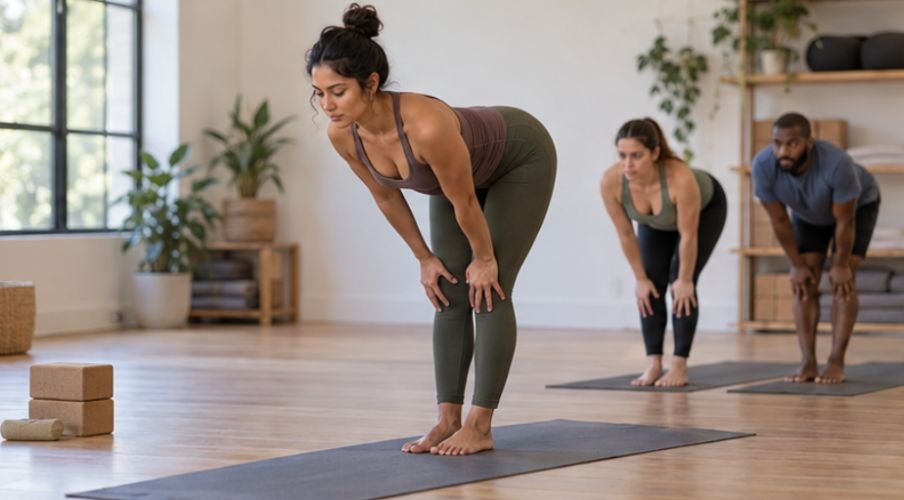
A cue can sound elegant and still be too fast to follow. Consider a transition from Downward Facing Dog into a standing lunge. Some students can step forward in one exhale. Others will lower their knees, move their foot by hand, or take several breaths. All of those are reasonable ways to arrive.
Instead of insisting on one breath for the entire transition, try: “Exhale, start stepping your right foot forward. Take another breath if you need it. When you feel steady, inhale and lift your chest.” This preserves the connection between breath and movement while allowing the transition to be completed comfortably.
For a different approach to combining structured movement with breath, explore this Kundalini Kriya beginner guide and structure, which explains how kriya practices are organized around breath, movement, and focused attention.
The same principle applies to lowering from Plank. A student might lower their knees first or skip a lowering transition. Cue the next accessible destination, and avoid making a particular pace sound mandatory.
Use Silence as Part of the Cue
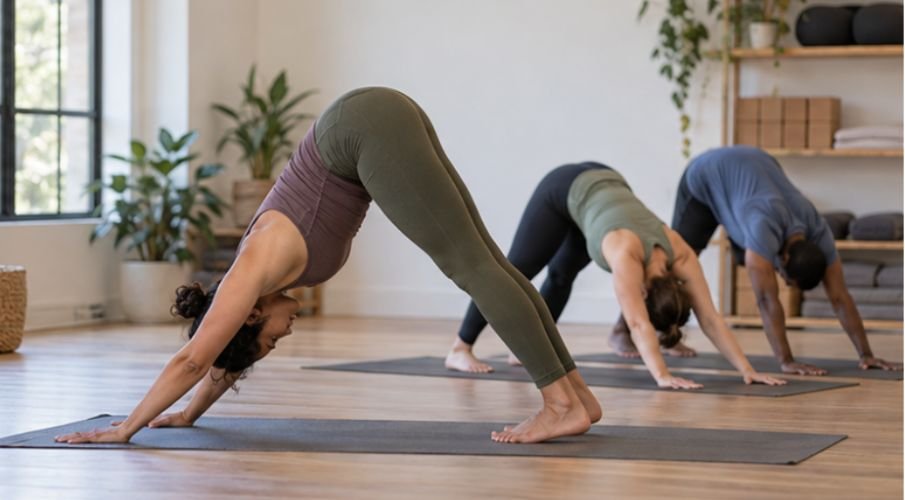
Teachers can feel pressure to fill every second with instructions. Yet students need time to hear a cue, move, and notice how they feel. After a familiar instruction, a few quiet breaths can make the sequence easier to follow.
Silence also gives you a chance to observe. Are students moving steadily, or are they rushing to keep up? Can they breathe comfortably in the pose? Their responses can tell you whether to repeat a sequence, slow down, or offer a simpler transition.
If someone becomes dizzy, short of breath, or uncomfortable, invite them to stop and return to a comfortable position and natural breathing. Yoga guidance from Cleveland Clinic advises pausing when dizziness or pain occurs during a flow.
If wrist discomfort affects weight-bearing transitions, learning can you do aerial yoga with wrist pain can help students understand when to modify movements and avoid aggravating the wrists.
Cue for the People in the Room
A mixed-level class rarely moves in perfect unison. One student may know the sequence well; another may be hearing the pose names for the first time. Give the whole room a clear primary cue, then offer an option where it matters: “Step or walk to the top of your mat,” or “Lower your knees if that helps you move steadily.”
You can also separate breath from arrival. For students progressing toward arm balances, practicing how to hold Crow Pose longer balance tips can help develop the balance, control, and body awareness needed to move confidently through transitions.
“Inhale as you begin to rise” leaves more flexibility than “Finish standing by the end of this inhale.” The aim is to support attention and movement, not to test whether students can match your breathing rate.
Frequently Asked Questions
1. Should every movement take exactly one breath?
No. Short, familiar movements may fit one breath, while longer transitions may take several. Let students complete the movement and breathe comfortably before continuing.
2. Do you always inhale when lifting and exhale when lowering?
That is a helpful starting pattern, but it does not cover every pose or transition. Choose cues that are easy to follow and allow students to return to natural breathing whenever needed.
3. How can I improve vinyasa yoga breath to movement cueing?
Practice speaking a short sequence aloud while moving through it yourself. Check whether each instruction arrives before the movement and whether the transition fits the time you have allowed. Then teach it slowly enough to observe how students respond.
Conclusion
When I plan a flow, I begin with the movements students need to understand and add the simplest breath cues that support them. I leave space for longer transitions, repeat familiar language, and pause when the room needs another breath. Clear cueing helps students follow the sequence while staying attentive to their own bodies.



One thought on “Vinyasa Yoga Breath to Movement Cueing: A Flow You Can Teach Clearly”