
Your lymphatic system moves several liters of fluid through the body without a heart-like central pump. Instead, lymph transport depends on a combination of vessel contractions, breathing, skeletal-muscle activity, tissue pressure changes, and one-way valves. That makes suspended movement especially interesting.
The potential aerial yoga inversion benefits for lymphatic drainage come less from simply “hanging upside down” and more from combining changing body position with muscular movement, diaphragmatic breathing, compression, and release.
There is an important distinction, however. Research supports these mechanisms individually, but scientists have not yet established aerial yoga inversions as a treatment for lymphedema or proved that they “flush toxins” from the body. Understanding that difference makes the practice both more useful and safer.
Why Your Lymphatic System Needs Movement
The lymphatic system collects excess fluid from tissues, transports immune cells, filters material through lymph nodes, and eventually returns lymph to the bloodstream. The National Cancer Institute also describes its role in maintaining fluid balance and removing cellular debris and harmful substances from tissues. A common explanation says lymph moves only because the body lacks a central pump. That is incomplete.
Collecting lymphatic vessels contain smooth muscle capable of rhythmic contractions. At the same time, external forces—including skeletal-muscle contractions, breathing, arterial pulsation, and movement of surrounding tissues—help propel lymph. One-way valves help limit backward movement.
That physiology provides a more credible explanation for why movement practices may support normal lymph circulation.
How Aerial Inversions May Influence Lymph Movement
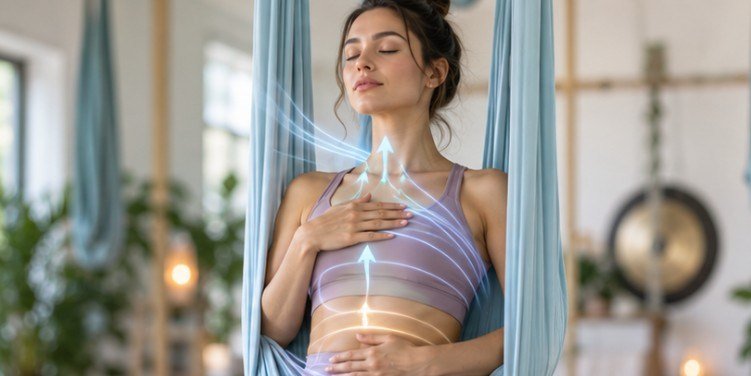
Changing Gravity Alters Fluid Distribution
Spend most of a day sitting or standing and gravity influences how fluid is distributed through the body. Elevating a limb can sometimes temporarily reduce ordinary dependent swelling, and elevation is also used within some lymphedema-management plans.
An aerial inversion changes that relationship by placing the legs and pelvis above—or partially above—the torso.
That does not mean gravity suddenly pulls all lymph directly into the thoracic duct. Lymphatic transport is far more regulated than that. Still, repositioning the body may temporarily change hydrostatic pressures and fluid distribution.
This is one reason a supported inversion can feel noticeably different from simply standing after a long day.
Movement Creates a Pump-and-Release Pattern
Another potential mechanism involves repeated muscular contraction and tissue deformation.
Research into lymphatic physiology shows that cyclical compression and expansion of tissues can assist lymph formation and transport. Skeletal-muscle contractions are particularly relevant because moving muscles repeatedly change pressure around nearby lymphatic vessels.
During aerial yoga, that can happen while bending the knees, extending the legs, rotating the hips, contracting the core, or transitioning into and out of a hammock-supported pose.
The fabric may also produce localized pressure against areas such as the thighs, pelvis, or torso. It is reasonable to compare this loosely with external compression, but the hammock should not be described as equivalent to medical manual lymph drainage.
Clinical lymphatic massage uses deliberately directed, gentle techniques performed or taught by trained professionals.
Deep Breathing May Matter More Than Being Upside Down
One of the least dramatic parts of aerial yoga may be among the most physiologically relevant: breathing.
Pressure inside the chest and abdomen changes during respiration. Those pressure shifts contribute to the external mechanisms that assist central lymph movement. The National Cancer Institute’s lymphatic physiology material specifically identifies respiratory movement, skeletal-muscle activity, and smooth-muscle contraction as contributors to lymph flow.
Memorial Sloan Kettering Cancer Center even incorporates diaphragmatic breathing into exercises intended to help people manage lymphatic swelling. Their instructions pair slow abdominal breathing with controlled limb movements.
In practical terms, calmly breathing through a supported aerial position probably makes more physiological sense than holding your breath while forcing yourself through a difficult inversion.
A Simple Lymph-Friendly Aerial Yoga Sequence

You do not need an advanced upside-down pose to combine the mechanisms associated with normal lymph movement.
Begin with two or three minutes of comfortable diaphragmatic breathing while standing or sitting in the hammock. Let the abdomen expand on inhalation instead of lifting only the upper chest.
Next, perform gentle supported leg movements, ankle flexion and extension, or slow knee bends. Muscle contractions in the calves and legs create repeated changes in tissue pressure.
Then move into a mild supported inversion only if you already tolerate inversions comfortably. Beginners should first become familiar with basic hammock positioning; these aerial yoga poses for beginners are a more sensible starting point than immediately attempting a full inversion.
Remain relaxed rather than chasing maximum hang time. Take slow breaths, make small controlled leg movements if appropriate, and return upright gradually.
Finish with several minutes of gentle walking or standing movement rather than going directly from inversion to prolonged sitting.
| Part of the practice | Potential lymph-related mechanism |
| Diaphragmatic breathing | Changes pressure within the chest and abdomen |
| Leg and core movement | Creates skeletal-muscle pumping |
| Hammock transitions | Produces cycles of tissue compression and release |
| Supported inversion | Temporarily changes body position and fluid distribution |
| Slow return upright | Allows gradual readjustment to normal gravity |
Johns Hopkins Medicine similarly includes breathing, flexibility, strengthening, posture, and aerobic exercise within professionally supervised lymphedema therapy rather than relying on one special position.
The Biggest Misconception: Inversions Do Not “Detox” You
The phrase “detoxifies the lymphatic system” is popular in wellness marketing, but it oversimplifies human physiology.
Lymph nodes filter lymph and participate in immune function. The kidneys, liver, lungs, gastrointestinal system, and other organs process or eliminate different waste products. Hanging upside down does not suddenly purge unspecified “toxins.”
A better way to describe the aerial yoga inversion benefits for lymphatic drainage is that the practice combines several physical influences already known to participate in normal lymph transport. That is promising physiology—not proof of a medical detox treatment.
Who Should Be Careful With Aerial Inversions?
More inversion is not automatically better.

Head-down yoga positions can rapidly increase intraocular pressure. The American Academy of Ophthalmology’s EyeWiki notes that inverted positions have produced measurable rises in eye pressure and advises people with glaucoma or significant glaucoma risk to discuss avoiding head-down yoga positions.
Anyone with uncontrolled blood-pressure problems, significant cardiovascular disease, recurrent fainting, severe vertigo, recent surgery, eye-pressure disorders, or another condition affected by inversion should obtain individualized medical advice before attempting full aerial inversions.
People with diagnosed lymphedema should be especially cautious about substituting aerial yoga for treatment. Standard management can include compression, exercise, skin care, and professionally directed manual lymph drainage depending on the individual.
The hammock itself also matters. Clothing that covers the armpits, waist, and backs of the knees can reduce friction and pinching; see what to wear to aerial yoga before your first class.
Good alignment is equally important. Applying principles from Iyengar yoga alignment techniques for posture can help you think about joint positioning and controlled movement rather than simply trying to hang deeper.
Frequently Asked Questions
1. Does aerial yoga actually improve lymphatic drainage?
Movement, muscle contraction, breathing, and pressure changes can support normal lymph transport. Direct clinical evidence proving that aerial yoga inversions significantly increase lymphatic drainage, however, remains limited.
2. How long should I stay inverted?
There is no scientifically established inversion duration for lymph drainage. Beginners should use short, comfortable holds under qualified instruction and return upright immediately if they feel dizzy, nauseated, painful, or unwell.
3. Can aerial yoga reduce leg swelling?
Movement and positional changes may temporarily influence fluid distribution, but persistent or unexplained swelling requires medical assessment. Aerial yoga should not replace treatment for edema or lymphedema.
4. Is aerial yoga safe for someone with lymphedema?
It depends on the cause, location, severity, treatment history, and other health conditions. Ask your physician or certified lymphedema therapist before adding hammock compression or inversion.
A Better Reason to Turn Your Practice Upside Down
The most interesting thing about aerial inversion is not the dramatic upside-down photograph. It is how many ordinary physiological mechanisms happen simultaneously: muscles contract, tissues compress and release, breathing changes pressure inside the torso, and body position temporarily alters fluid distribution.
Those mechanisms make the proposed aerial yoga inversion benefits for lymphatic drainage biologically plausible, but they should not be exaggerated into claims of instant detoxification or lymphedema treatment.
Use the hammock as a movement tool rather than a medical shortcut. Breathe deeply, move deliberately, choose supported positions you can control, and let consistency—not extreme inversion—do the useful work.