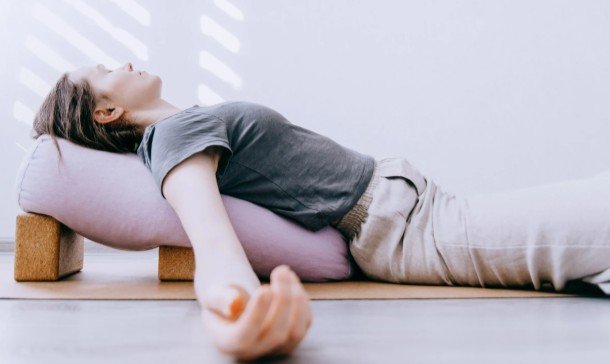
Some evenings, I want to slow down, but sitting still feels like another task I have to get right. A supported yoga pose gives my body somewhere comfortable to settle, while gentle sound gives my attention somewhere to rest. Together, they make a simple ritual that does not require flexibility, expensive equipment, or a perfectly quiet home.
If you are wondering how to create a restorative yoga and sound routine, begin with comfort. Choose a few positions you can hold without effort, pair them with sound at a pleasant volume, and leave enough time to settle between poses. The 30-minute practice below gives you a starting point you can adjust to your body and schedule.
What Makes a Practice Restorative?
Restorative yoga uses props to support your body in restful positions for several minutes at a time. Unlike a flowing class, the aim is not to complete as many poses as possible. You should be able to breathe naturally without gripping your muscles or pushing into a stretch. If you experience muscle spasms and cramps, adjust your position or add more support rather than trying to hold the pose.
Sound can offer a gentle point of focus while you rest. You might choose quiet instrumental music, nature sounds, a recorded sound bath, or occasional chimes. There is no required instrument or special frequency. If silence feels better, use silence. The routine should help you unwind, not give you another sensation to tolerate.
Set Up a Space You Will Actually Use
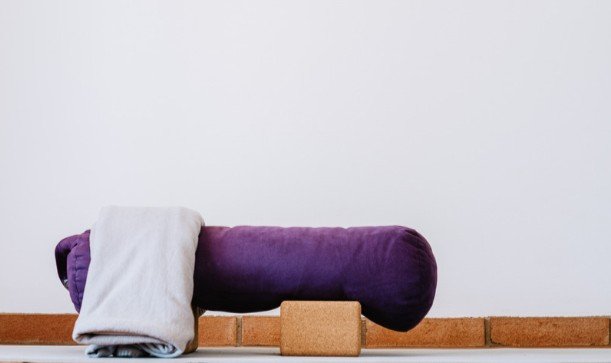
Place a mat or folded blanket where you have room to lie down. Gather two pillows or cushions, a rolled towel, and a blanket to place over yourself. A bolster is useful if you own one, but it is optional. Keep everything within reach so you do not have to interrupt a pose to find support.
Dim the lights if that feels comfortable, silence notifications, and choose your audio before you begin. Use a speaker or headphones at a low, comfortable volume. Check that the recording will run through the practice without a sudden loud advertisement or abrupt ending. Set a soft timer if you prefer a cue for changing positions.
You can practice at any time. An evening session may help mark the end of a busy day, while a shorter daytime session can give you a pause between activities. Pick a time you can repeat without turning the routine into an obligation.
A 30-Minute Restorative Yoga and Sound Routine
Minutes 0–3: Arrive and Listen
Sit with your back supported or lie down with your knees bent. Let your breathing find its own pace. Notice where your body touches the floor, then bring your attention to the sound. You do not need to match your breath to the music or clear your mind. When your thoughts wander, return to what you can hear.
Minutes 3–10: Supported Reclining Pose
Place a cushion lengthwise behind your back and lower yourself onto it. If you like, bring the soles of your feet together and support each knee with a pillow. You can also keep your knees bent with your feet on the floor. Choose the version that lets your hips and lower back relax.
Stay for about seven minutes. A sustained, gentle soundscape can work well here because you can listen without waiting for the next note. Add more support if you feel yourself holding your legs in place.
Minutes 10–17: Supported Child’s Pose
Come onto your hands and knees, place a pillow or folded blankets beneath your torso, and ease back only as far as feels comfortable. Turn your head to one side, switching sides halfway through. If this position bothers your knees, hips, or neck, sit in a chair and rest your folded arms on a table with cushions beneath them.
Keep the audio soft. Let each exhale happen naturally, and notice whether your shoulders can release a little more of their weight into the support.
Minutes 17–23: Legs on a Chair
Lie on your back and place your lower legs on the seat of a sturdy chair, with your knees comfortably bent. Put a small pillow under your head if needed. This option requires little setup and may feel easier than placing your legs against a wall.
For this part of the routine, try a recording with fewer changes in pitch or volume. If sound starts to feel distracting, lower it or switch it off. Your comfort matters more than following the audio through to the end.
Minutes 23–28: Final Rest
Move the chair aside and settle into a comfortable lying position. Support your knees with a pillow and cover yourself with a blanket if you feel cool. You can stay on your back or rest on your side with a cushion between your knees.
Let the audio fade or end before you move. Spend a moment noticing the room again. There is no particular sensation you need to achieve; resting comfortably is enough.
Minutes 28–30: Return Slowly
Wiggle your fingers and toes, roll to one side if that is comfortable, and take your time sitting up. Use simple grounding techniques, such as feeling your feet against the floor and noticing the sounds around you. Pause to see how you feel before reaching for your phone or moving on to the next task.
Make the Routine Fit Your Body and Day

A pose should feel supported, never painful or forced. Add a cushion, change position, or leave a pose early whenever you need to. If lying down is uncomfortable, build the entire practice around a supportive chair.
On a busy day, choose one comfortable pose and listen for five to ten minutes. You can also spend longer in fewer positions if frequent transitions break your sense of rest. Repeating a manageable version is more useful than waiting for a perfect half hour.
Keep your expectations gentle, too. This is a relaxation practice, not a treatment for a health condition. Sound affects people differently, so choose audio that you enjoy and can control. If you have an injury, are pregnant, or have a condition that makes certain positions uncomfortable, ask a qualified professional which modifications suit you.
Frequently Asked Questions
1. How do I know how to create a restorative yoga and sound routine as a beginner?
Start with one or two fully supported poses, a quiet recording you enjoy, and a short session. Once you know what feels comfortable, add time or another pose. You do not need a singing bowl or previous yoga experience to begin.
2. Should sound play during every pose?
No. You may enjoy sound throughout, only during final rest, or briefly when you first settle. Silence between tracks can be part of the practice.
3. What if I fall asleep?
It can happen when you are comfortable and tired. If you would rather stay awake, practice earlier, leave a light on, or choose a seated position. Use a soft alarm if you need to finish at a particular time.
A Gentler Way to End the Day
I return to this kind of practice because it is easy to adapt. Some days I follow the full sequence; other days I rest with a pillow beneath my knees and listen for a few minutes. Both count. Give yourself enough support to be comfortable, choose sound that feels welcome, and let the routine become a quiet pause you can return to.