
When my thoughts feel busy, I find it easier to focus on breathing if I have a quiet sound to listen to. A steady recording of rain or soft instrumental music gives my attention somewhere to settle. Learning how to pair breathing exercises with calming sounds does not require special equipment or a perfectly silent room. Start with a sound you enjoy, keep it at a comfortable volume, and choose a breathing pace that feels natural.
The key is to give breath and sound different jobs. Your breathing sets the pace of the exercise. The audio provides a gentle background or a cue that helps you return your attention when it wanders.
Which calming sounds work best for breathing exercises?
A predictable sound is often easiest to use. Gentle rain, flowing water, soft wind, and quiet instrumental music can sit in the background without demanding much attention.
You can also learn how to use singing bowls for meditation to incorporate soothing sounds into a relaxing mindfulness practice.
If a recording has sudden thunder, loud bird calls, spoken advertisements, or sharp changes in volume, try something steadier.
Choose based on how the sound makes you feel, rather than assuming one type works for everyone.
For another gentle way to combine sound and relaxation, explore a sound bath for beginners to learn how soothing tones can support a calming mindfulness practice.
Ocean waves may help you settle into a rhythm, while a continuous rain recording may be less distracting.
Music with lyrics can draw your attention toward the words, so an instrumental track may be easier for a short breathing session. If you prefer making sound yourself, you could also explore singing for lung health as a separate breathing practice. Play the sound softly enough that you can still notice your breath and your surroundings. If you keep adjusting the volume or waiting for the next sound, choose a simpler track.
Should you match every breath to the sound?
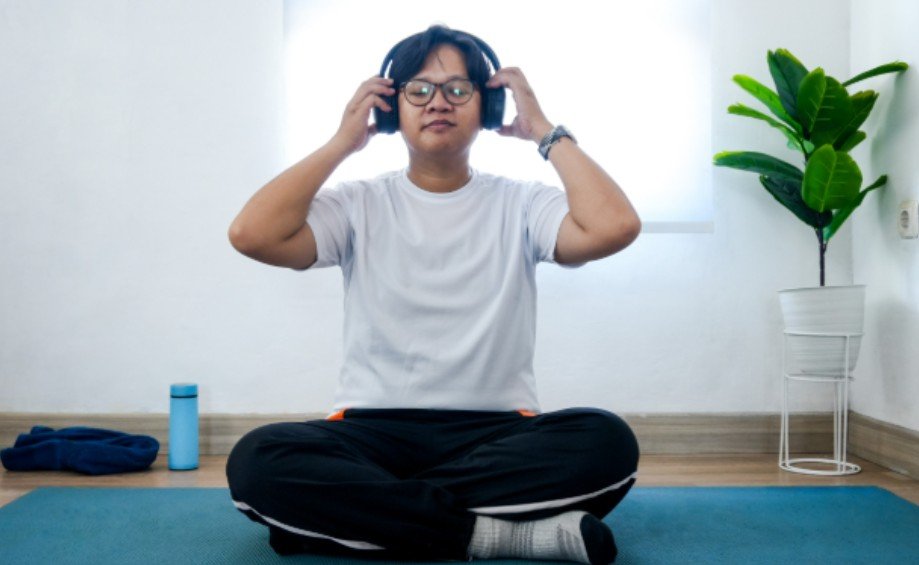
You can, but you do not have to. Many nature recordings do not follow a reliable rhythm. A wave might break sooner than you expect, and trying to time every inhale to it can turn a calming exercise into a counting task.
Instead, let the sound mark the beginning of your practice. Press play, take a moment to listen, and then breathe at your own comfortable pace. When you notice your mind drifting, listen for one detail in the audio before returning to your next breath.
A guided breathing track works differently. Its voice or tones are designed to provide pacing cues, so you can follow them if the timing feels comfortable. If a cue asks you to breathe faster, hold your breath longer, or take a deeper breath than feels easy, return to your natural breathing.
How do you combine slow breathing and calming audio?
First, find a comfortable position. Sit with your feet supported or lie down if you prefer. Start a steady sound and give yourself a few breaths without changing anything. This helps you notice whether the audio feels soothing or distracting.
Next, inhale gently through your nose for a count of about four and exhale for a count of about six. Keep both breaths soft. You should not need to fill your lungs as much as possible or push the air out. If that timing feels awkward, try three counts in and four out, or simply make the exhale a little longer than the inhale.
Continue for two to five minutes. You can count silently, follow a guided track, or stop counting once you find a comfortable pace. At the end, let your breathing return to normal and notice how you feel. Feeling calmer is possible, but there is no result you need to force.
What sounds suit different moments of the day?
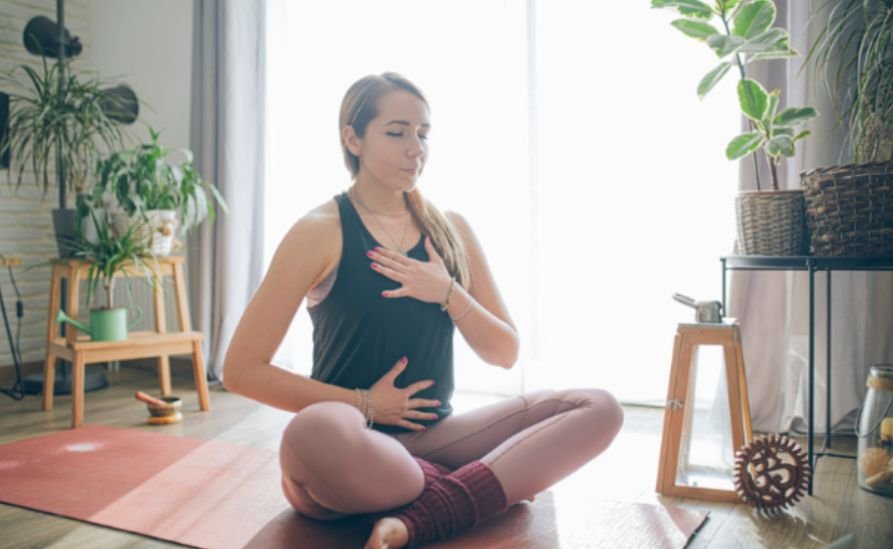
During a busy day
A brief session may fit better than a long recording. Try two minutes of gentle breathing with quiet rain or another consistent background sound. You can also explore gentle vagus nerve exercises, such as slow, comfortable breathing, if they suit you. If you are at a desk, resting your feet on the floor and looking away from your screen can make the pause feel more distinct.
Before bed
Choose audio that will not interrupt you with a sudden change or a loud ending.
Creating a calming sound ritual before bed can also help establish a relaxing nighttime routine that pairs gentle audio with comfortable breathing.
A steady soundscape can continue after you stop counting, letting you shift from a breathing exercise to simply listening. Keep your pace easy; bedtime is not the moment to turn breathwork into a performance.
When you need help following a rhythm
Try a guided track with a voice or soft pacing tones. Listen through part of it first so you know whether its instructions and speed suit you. You can always pause it and breathe comfortably on your own.
What if the sound or breathing exercise feels uncomfortable?
Change one element at a time. Lower the volume, switch recordings, shorten the session, or stop counting. Some people prefer silence, especially when they already feel overstimulated. Others find that a familiar sound helps them focus. Both responses are reasonable.
Avoid pushing through dizziness, breathlessness, or distress. Return to ordinary breathing and rest. If breathing exercises regularly cause symptoms or you have a condition that affects your breathing, ask a qualified healthcare professional for guidance suited to you.
Frequently asked questions
1. Can I use music instead of nature sounds?
Yes. Try soft instrumental music with an even volume. If its beat makes you rush your breathing, treat it as background audio rather than a pace to follow.
2. How long should I practice?
Two to five minutes is a manageable place to begin. You can stop sooner if that is enough for you or practice longer when it remains comfortable.
3. Do I need headphones?
No. A speaker at a gentle volume works well. Headphones are an option if they help you hear the track without raising the volume.
4. What is the easiest way to remember how to pair breathing exercises with calming sounds?
Choose one steady sound, breathe gently with a comfortable exhale, and let the audio bring your attention back whenever it wanders.
A gentler way to begin
I get the most from this practice when I keep it simple. I choose a sound I like, breathe without strain, and stop checking whether I am doing it perfectly. Even a few quiet minutes can give me a useful pause in the day. If the sound stops helping, I change it or turn it off. The routine should fit the person practicing it.