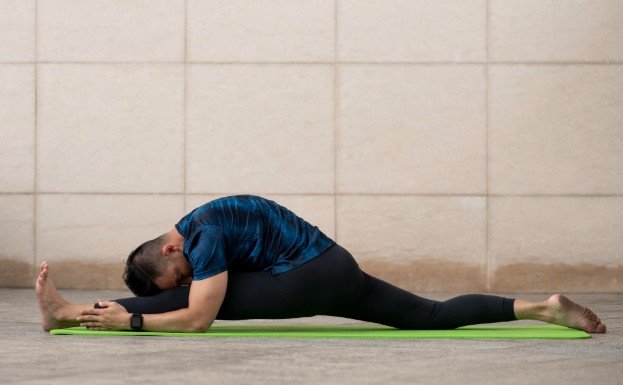
By the time I slow down at the end of a day, I often know what I accomplished but have little idea how the day felt. A quiet moment can reveal a clenched jaw, tired eyes, or a worry I kept setting aside. Yoga Nidra techniques for self-awareness help me notice those signals without demanding that I explain or change them immediately. That small shift—from reacting to observing—is what makes the practice useful to me.
Yoga Nidra is a guided resting practice that moves attention through the body, breath, sensations, feelings, and thoughts. You can approach it as a chance to check in with yourself. There is no requirement to empty your mind, visualize perfectly, or reach a particular state of relaxation.
What Self-Awareness Looks Like During Yoga Nidra
Self-awareness can begin with something ordinary: noticing that your shoulders rise when you think about tomorrow, or that your breathing feels easier after you settle. You may recognize an emotion only after you notice where you feel it in your body.
The practice gives each experience a little space. A thought can appear without becoming your next task. A feeling can be acknowledged without needing an instant explanation. Some sessions will feel restful; others may show you how distracted you are. Both offer information.
Prepare a Space Where You Can Pause
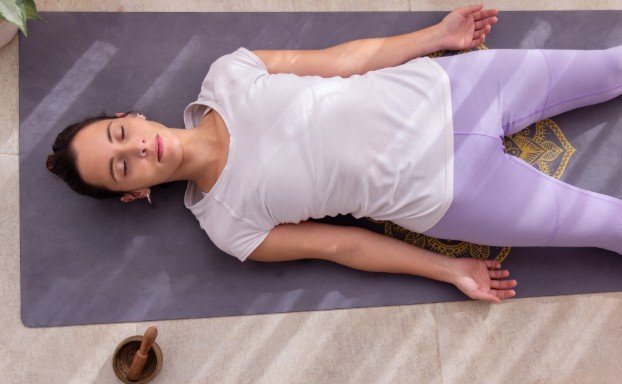
Set aside about 15 minutes and choose a place where you feel comfortable. Lie on your back with support beneath your knees, rest on your side, or sit in a chair. If back discomfort affects how you rest, you may already be familiar with sleeping positions that reduce backpain; use the same idea of gentle support to find a comfortable position for this practice. Add a blanket if you want one. A guided recording can carry you through the stages, especially when you are new to the practice.
Before beginning, notice the contact between your body and the surface supporting it. You can close your eyes or let your gaze rest gently on one spot. If you need to move, move. Comfort matters more than holding a particular position.
Choose a Simple Intention
An intention, or sankalpa, is a brief phrase you silently bring into the practice. Choose one that encourages curiosity, such as “I can listen to what I feel” or “I can meet this moment with kindness.”
You do not need to believe the phrase completely or repeat it throughout the session. Let it remind you how you want to respond to whatever you notice.
Follow a Body Scan
Move your attention through your body one area at a time. Notice your hands, arms, shoulders, face, chest, abdomen, legs, and feet. This body scan is one way to practice mindfulness and Yoga Nidra for everyday stress. A guide may name many smaller areas; you can follow along without trying to remember the sequence.
As your attention reaches each place, observe what is present. You might feel warmth, pressure, tingling, tightness, or no distinct sensation. Try describing a sensation before deciding what it means. “My jaw feels tight” is enough. You do not have to figure out why.
When your mind wanders, return to the part of the body being named. The moment you realize your attention drifted is itself a moment of awareness.
Let the Breath Be an Anchor
Next, notice where breathing is easiest to feel. It might be the air at your nose or the rise and fall of your abdomen. Allow the breath to move naturally rather than trying to make it deeper.
Observe whether it changes as you rest. It may become slower, or it may not. Your task is simply to notice. Whenever a thought takes your attention elsewhere, the next breath gives you a place to return.
Notice Sensations, Emotions, and Thoughts
Some Yoga Nidra practices explore contrasts such as heaviness and lightness or warmth and coolness. You might notice that your legs feel heavy against the floor while your hands feel light. There is no need to create either sensation. See what is already available.
Then consider whether an emotion is present. If you can name it, do so gently: “uncertainty,” “relief,” or “irritation.” If you cannot name it, you can notice where it seems to show up in your body. You may also hear an inner comment such as “I should be more relaxed.” Treat that as another thought to observe.
If paying attention inward feels overwhelming, open your eyes and look around the room. You can change the practice, return to noticing sounds, or stop.
Try a 15-Minute Practice
To bring Yoga Nidra techniques for self-awareness together, spend the first two minutes getting comfortable and setting your intention. Use the next five minutes for a body scan and three minutes to observe your breath. Spend three minutes noticing sensations, feelings, and thoughts. During the final two minutes, feel the surface beneath you, listen to nearby sounds, and return gradually to the room.
Afterward, ask yourself one question: “What did I notice that I had missed earlier?” You can write down a sentence if that helps. Perhaps you need rest, a break from a task, or time to think about a conversation. You can also leave the question unanswered.
Frequently Asked Questions
1. How often should I use Yoga Nidra techniques for self-awareness?
Start with a schedule you can maintain comfortably. Even a short session gives you time to check in. Regular practice may make it easier to recognize familiar patterns in your thoughts and physical sensations.
2. What if I fall asleep?
That can happen, particularly when you are tired. If you want to remain more alert, try practicing earlier in the day, choosing a shorter recording, or sitting in a supportive chair.
3. Do I have to follow every stage?
No. Guided practices vary. You can use the stages that help you pay attention and skip imagery or other guidance that does not suit you.
A Moment to Carry Forward
I value Yoga Nidra most when I stop expecting a dramatic insight. Some days, I notice a feeling I had overlooked. Other days, I simply realize I am tired. Either observation can help me respond more thoughtfully to what comes next. I can take that habit of listening with me, even after the session ends.