I know how strange it feels to be physically exhausted while my mind is still running at full speed. After a day of emails, meetings, commuting, family responsibilities, and constant screen time, simply lying down does not always make me feel rested. Instead of trying to force my thoughts to stop, I prefer giving my attention a simple path to follow.
10-minute Yoga Nidra for deep relaxation offers exactly that: a short guided practice that moves from external awareness to breath, intention, body scanning, and deep stillness. You do not need previous yoga experience or a long meditation session. With a comfortable place to lie down and ten quiet minutes, you can create a deliberate pause between a demanding day and whatever comes next.
What Happens During a 10-Minute Yoga Nidra Practice?
Yoga Nidra is often described as “yogic sleep,” but the goal is not necessarily to fall asleep. The practice is usually done lying down while awareness moves through breath, physical sensations, a body scan, and a personal intention. Sleep Foundation describes Yoga Nidra as a guided relaxation practice that may support sleep and stress reduction, while noting that research is still developing.
A short session keeps the core structure while making deep rest more practical for beginners.
How Should I Prepare for Yoga Nidra?
Start in Shavasana
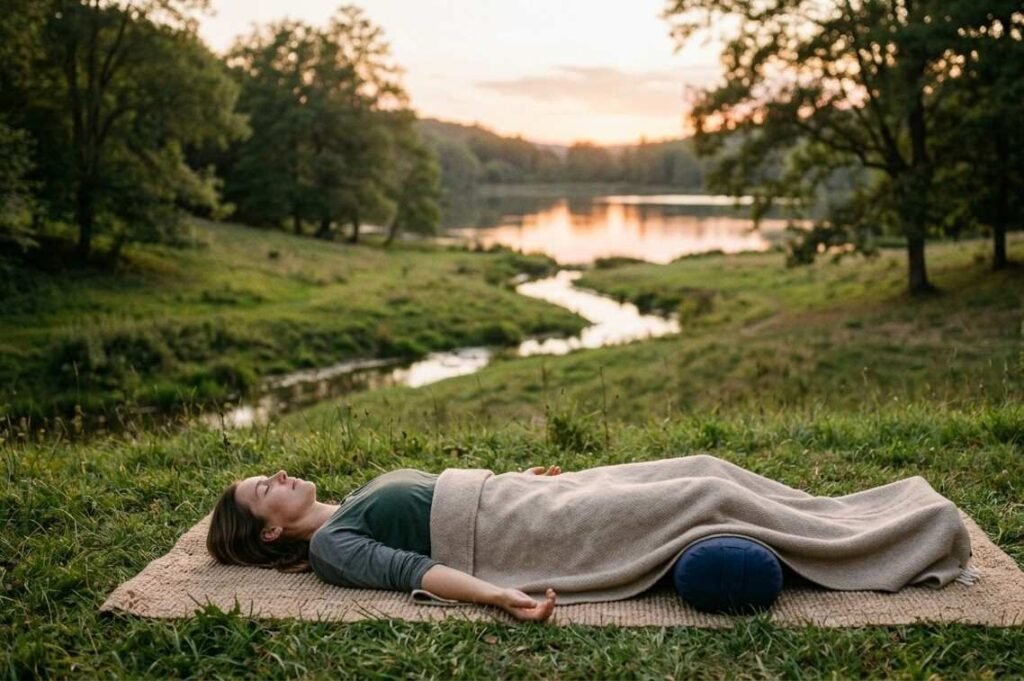
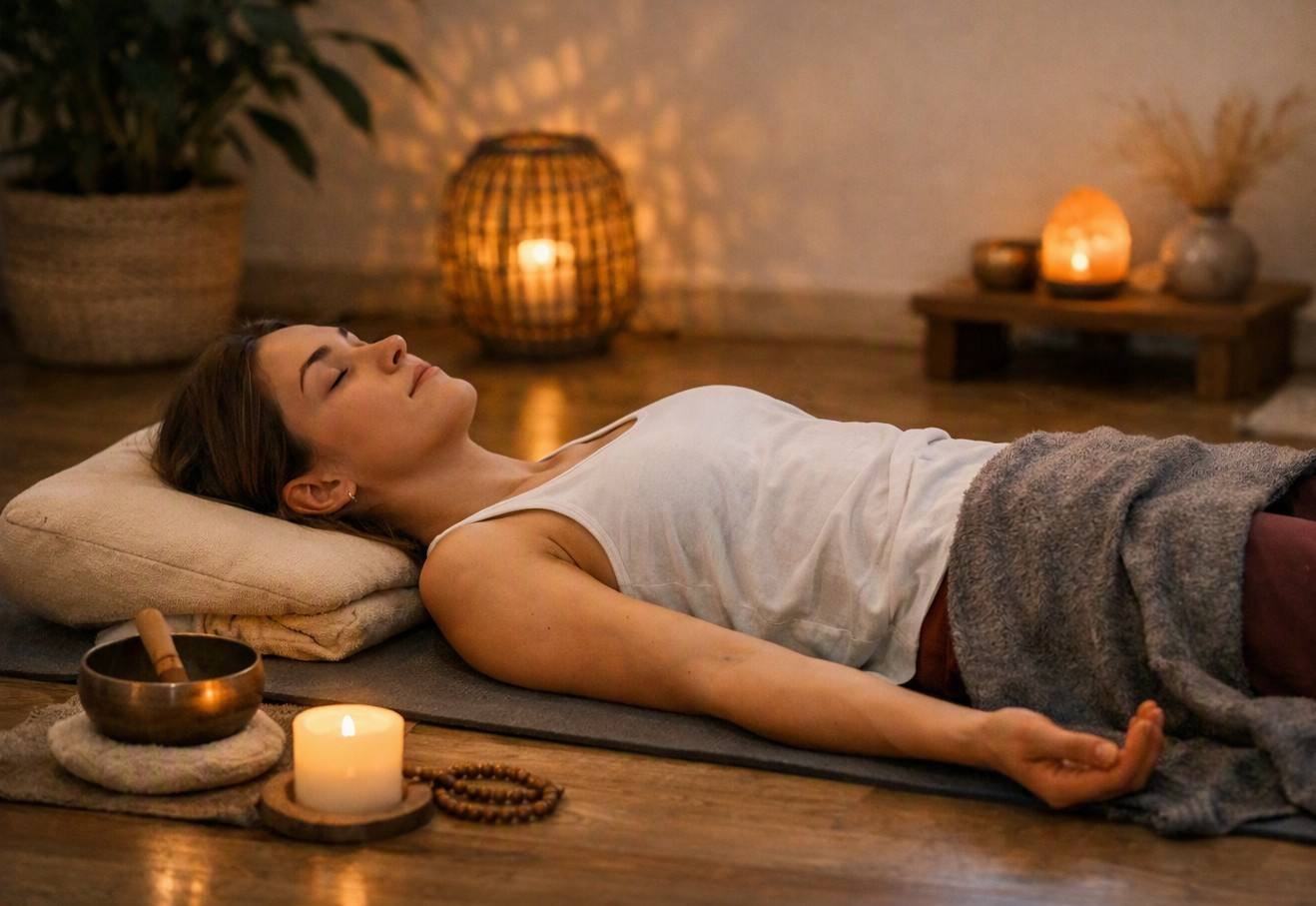
Lie flat on your back in Shavasana, or corpse pose. Let your feet rest wider than your hips and place your arms slightly away from your torso with your palms facing up.
Use a pillow or blanket if needed. Silence notifications, get warm and comfortable, close your eyes, and take three slow breaths. A mat, couch, carpet, or bed can work. Traditional 10-minute Yoga Nidra scripts commonly begin with this comfortable Shavasana setup before moving awareness inward.
How Do I Follow a 10-Minute Yoga Nidra Script?
Minute 1: Notice Sound and Turn Inward
Listen to sounds around you without naming or judging them. Notice distant sounds first, then closer ones. Gradually shift attention inward to the natural movement of breath through your nostrils. Do not force your breathing to change.
This transition from external sound awareness to internal awareness helps separate the practice from the activity that came before it.
Minutes 1–2: Set a Sankalpa
A sankalpa is a short positive intention or resolution. Choose a phrase centered on rest, steadiness, or renewal and repeat it mentally three times.
Keep it simple. The intention is not another task to complete; it gives the practice a quiet direction. Traditional Yoga Nidra instruction commonly places the sankalpa after internalization and before the rotation of awareness.
Minutes 2–6: Use Rotation of Consciousness
Begin the Yoga Nidra body scan, traditionally called rotation of consciousness.
Start with your right thumb and move through the fingers, palm, arm, shoulder, right side of the torso, leg, foot, and toes. Repeat on the left side. Then bring awareness to the back of your body, followed by the front.
As each area enters awareness, let it soften. You do not need to move or fix anything. This systematic body scan is one feature that separates traditional Yoga Nidra from a general relaxation exercise.
Minutes 6–8: Count Your Breaths Backward
Bring attention back to natural breathing. Feel the abdomen rise and fall without forcing a rhythm.
Begin counting backward from 9. Notice 9 as you inhale and exhale, then continue with 8, 7, and so on. If you lose track, return to 9 without judging yourself.
This breath-awareness stage gives a busy mind one simple anchor while the body remains still. Backward counting with natural breathing also appears in traditional short Yoga Nidra sequences.
Minutes 8–10: Reorient Slowly
Let go of counting and notice your whole body resting at once. Feel the surface beneath you.
Gradually return to sounds in the room. Wiggle your fingers and toes, make a few comfortable movements, and gently turn your head. Bend your knees and roll onto one side for a few breaths, then press yourself slowly into a seated position.
Give yourself a moment before checking your phone or moving into the next task.
When Is the Best Time to Practice Yoga Nidra?
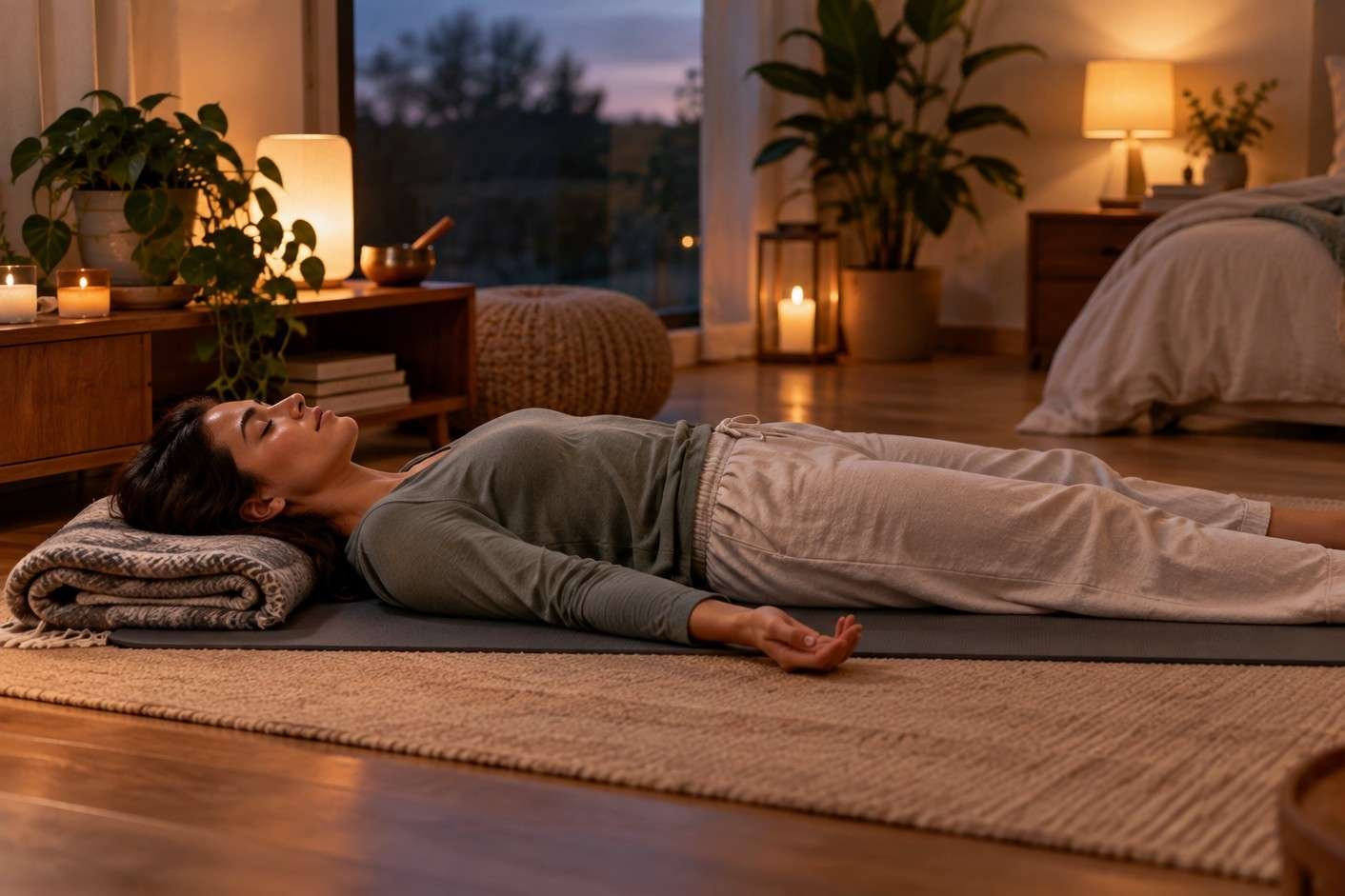
The best time is the time you can use consistently. During the workday, Yoga Nidra for stress relief can create a pause between meetings, projects, and screen-heavy tasks. After work, it can help mark the transition into your evening.
Yoga Nidra before sleep is also popular because the lying-down position and guided body scan fit naturally into a bedtime routine. If you always fall asleep but want to stay aware, try practicing in the late afternoon or early evening.
You may also hear Yoga Nidra discussed alongside non-sleep deep rest, or NSDR, though Yoga Nidra retains traditional elements such as sankalpa, rotation of consciousness, breath awareness, and reorientation.
Can 10 Minutes of Yoga Nidra Really Help?
Ten minutes will not replace adequate sleep or treat a sleep disorder. It can give you a defined period to reduce stimulation, stop moving, and direct attention toward breathing and physical sensations.
Current evidence suggests Yoga Nidra may support relaxation and sleep quality, but research is still developing, particularly for chronic sleep concerns.
I find the short format practical because ten focused minutes are easier to repeat than a long routine.
Frequently Asked Questions (FAQs)
1. Is 10-minute Yoga Nidra for deep relaxation good for beginners?
Yes. The short duration makes the practice approachable. Follow the guided sequence and, if your attention wanders, simply return to the current instruction.
2. What if I fall asleep during Yoga Nidra?
Falling asleep can happen, especially at bedtime. If you want to remain aware, practice earlier or use a firmer surface instead of your bed.
3. Can I practice Yoga Nidra every day?
A short daily practice can fit into a relaxation routine if it feels useful to you. Consistency matters more than forcing a longer session.
4. Can Yoga Nidra replace sleep?
No. Yoga Nidra can complement healthy rest habits, but it is not a substitute for the sleep your body needs.
Final Thoughts
I find relaxation easier to prioritize when it does not require an entire free evening. Shavasana, sound awareness, sankalpa, body scanning, breath counting, and slow reorientation can create a meaningful pause. The importance of body awareness becomes especially clear during this process because noticing physical sensations can help me shift attention away from mental noise and reconnect with the present moment.
Whether I use it after closing my laptop or before bed, ten quiet minutes give me permission to stop responding to everything around me and simply rest.