When my nervous system was completely fried from back-to-back client deadlines, traditional seated meditation felt like another grueling item on my to-do list. Every time I closed my eyes on a meditation cushion, my brain raced faster, treating the silence like an open courtroom.
Discovering how Yoga Nidra differs from traditional meditation completely transformed my evening routine, trading active mental discipline for an effortless slip into conscious rest.
The Core Contrast: Effortless Surrender Versus Active Mental Discipline
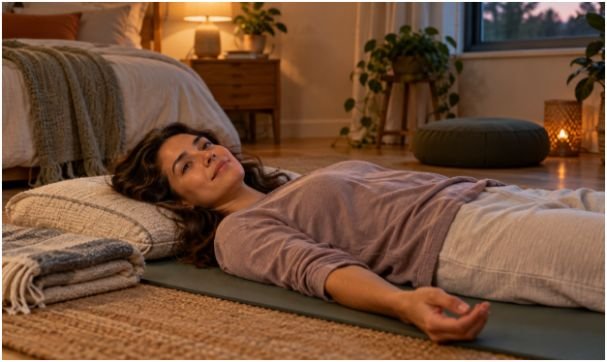
Understanding how Yoga Nidra differs from traditional meditation starts with the fundamental level of effort required. Traditional meditation is an active, self-guided discipline. It demands that you maintain alert, present-moment awareness, gently lassoing your attention back whenever your mind wanders off.
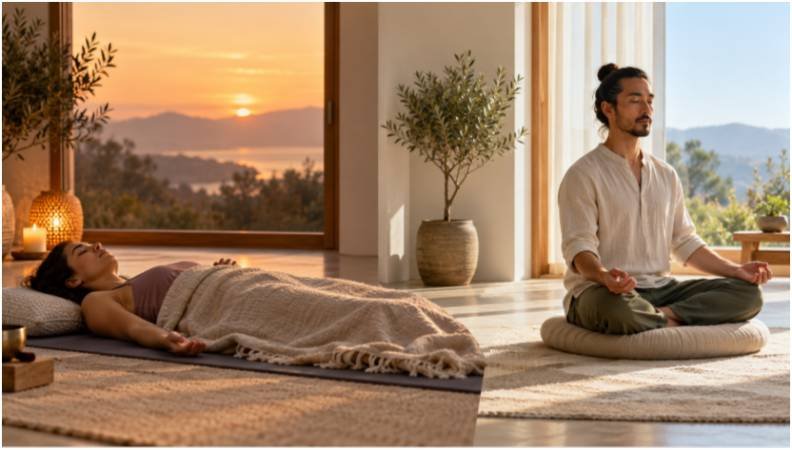
Yoga Nidra operates on the exact opposite principle. Translating literally to “yogic sleep,” it requires zero performance. You simply lie down, listen to a certified guide or audio track, and surrender control. Instead of fighting your wandering thoughts, you let a structured audio script pilot your awareness through physical and mental layers.
Structural and Postural Mechanics: Lying Down Versus Sitting Upright
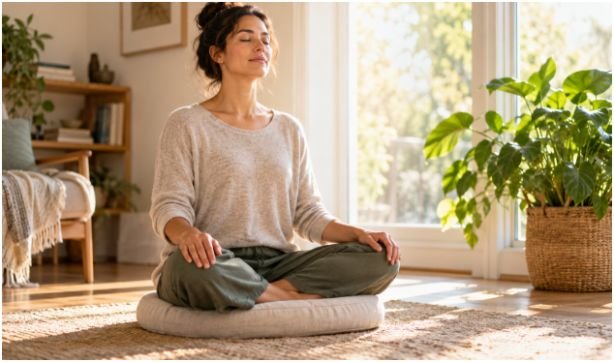
The physical frameworks of these two practices dictate how your body experiences rest and alertness.
Systematic Body Scanning and Multi-Step Scripts
Yoga Nidra utilizes a multi-step script that keeps your mind actively occupied so it can slip past conscious friction. Rather than anchoring on one spot, your guide leads you through a rapid body scan, breath awareness exercises, and alternating sensations like heavy and light, or heat and cold.
According to research published by the National Institutes of Health (NIH), systematic relaxation protocols significantly lower sympathetic nervous system activity. This keeps your brain too busy to fall into a dead sleep, yet too relaxed to stress.
Fixed Focus and Single-Anchor Concentration
Traditional meditation relies on a single anchor. Whether you focus on the physical sensation of your breath at the tip of your nose, repeat a Sanskrit mantra, or gaze at a candle flame, the technique is minimalist. When distraction strikes—and it always does—you build mental muscle by noticing the drift and returning to your anchor. As noted in insights from Yoga Journal, this builds endurance and sharpens daily focus.
Navigating Brain Waves: Accessing the Subconscious and Sankalpa

The neurological states achieved by each practice create vastly different internal landscapes. Traditional meditation primarily keeps your brain humming in alert alpha and beta wave states, sharpening your waking consciousness.
Yoga Nidra systematically transitions your brain waves down into the deep alpha and theta thresholds. This hypnagogic state—the sweet spot right on the border between wakefulness and sleep—opens a direct portal to your subconscious mind. Practitioners use this window to plant a Sankalpa, a heartfelt intention or positive affirmation.
Think of a Sankalpa as a seed planted deep in fertile soil, designed to rewrite entrenched mental habits long after you open your eyes. For deeper psychological insights on emotional regulation during restorative states, the Greater Good Science Center at UC Berkeley offers valuable explorations into mindfulness and somatic release.
Choosing Your Practice: Which One Fits Your Nervous System?
Deciding between these modalities depends entirely on your energetic reserves and daily goals.
- Choose Yoga Nidra if: You suffer from chronic burnout, struggle with insomnia, battle high anxiety, or possess a hyperactive mind that refuses to sit cross-legged. It serves as an incredible gateway into mindfulness for anyone intimidated by silence.
- Choose Traditional Meditation if: You want to build acute mental discipline, expand your daily concentration span, and cultivate unshakeable emotional resilience during stressful waking hours.
For comprehensive resources on clinical applications of restorative rest, you can explore guides on Healthline.
Frequently Asked Questions
1. Can Yoga Nidra replace a full night of sleep?
While deeply restorative, Yoga Nidra supplements but does not replace the essential biological stages of nocturnal sleep.
2. Do I need any special equipment for Yoga Nidra?
You only need a comfortable yoga mat, a blanket, and a quiet room where you can lie completely flat in Savasana.
3. Can beginners practice traditional meditation without guidance?
Yes, beginners can start with simple five-minute unguided breath-awareness sessions before attempting longer silent sits.
4. Is it normal to fall completely asleep during Yoga Nidra?
Falling asleep is common for exhausted beginners, but the goal is to hover right on the edge of awareness without crossing into unconsciousness.



5 thoughts on “How Does Yoga Nidra Differ From Traditional Meditation ?”