The biggest surprise for many first-time aerial students is that the softest-looking apparatus is often the easier place to start. Aerial yoga uses a wide fabric hammock to support much of your body weight, while lyra places you directly against a rigid steel hoop and asks you to stabilize, pull, balance, and sometimes spin.
That difference shapes nearly everything about aerial yoga vs lyra hoop for beginners: comfort, strength demands, learning speed, bruising, flexibility, and even how intimidating your first class feels. Neither requires you to arrive as a gymnast. But they create very different first experiences.
What Is the Real Difference Between Aerial Yoga and Lyra?
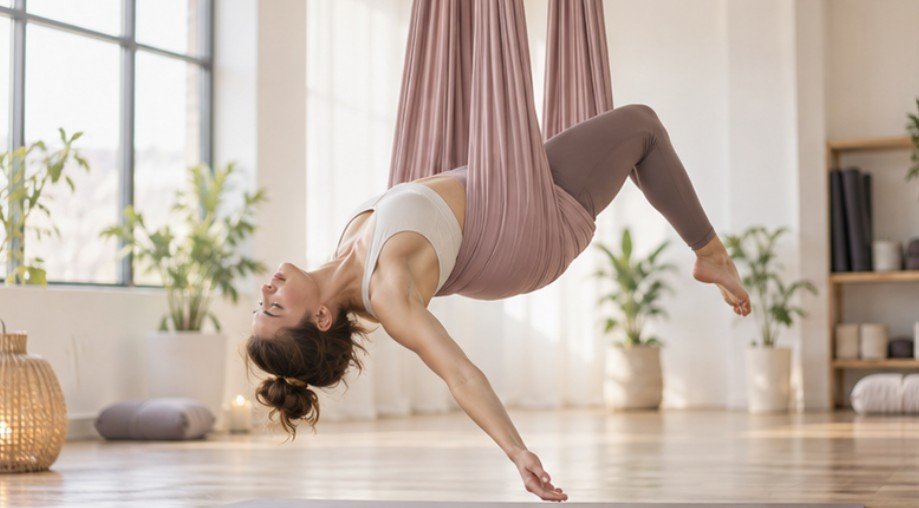
Aerial yoga combines familiar yoga-inspired movements with a suspended hammock. Depending on the class, the fabric may support standing poses, seated stretches, inversions, balance exercises, relaxation, or gentle spinal traction.
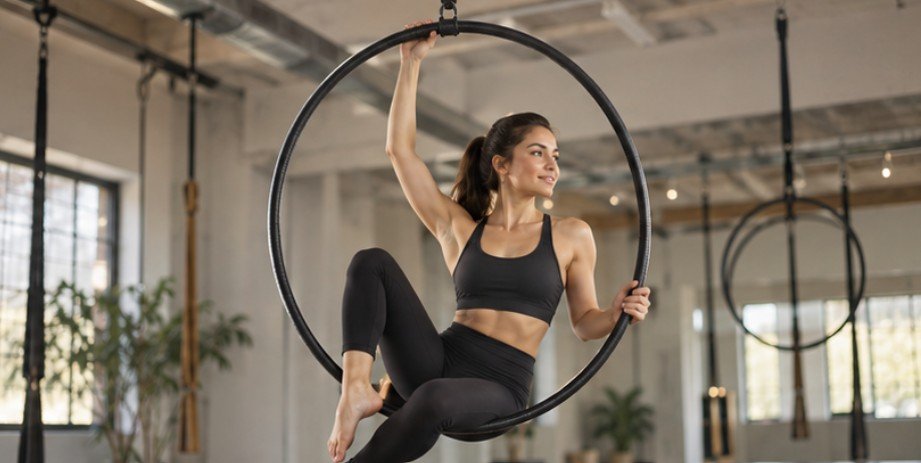
Lyra, also called aerial hoop or aerial ring, is closer to aerial arts. The apparatus is a circular metal bar suspended from one or two rigging points. Students learn how to enter the hoop, sit on it, hang from it, create shapes, transition between positions, and eventually work with spins and more dynamic sequences.
Traditional yoga itself has evidence supporting improvements in areas such as balance and stress management, according to the National Center for Complementary and Integrative Health. The agency also emphasizes learning under qualified instruction, particularly when beginners are attempting unfamiliar positions.
Aerial yoga extends some of those movement concepts into suspended practice, while lyra moves more decisively toward acrobatics.
Why Aerial Yoga Often Feels More Accessible First
The hammock distributes pressure over a wider surface than a metal hoop. That makes supported poses particularly useful for students who are nervous about leaving the floor.
You may place your hips in the fabric while stretching your hamstrings, lean backward while the hammock supports your weight, or use it to assist a balance pose that would feel harder without support.
That does not mean aerial yoga is effortless. Fabric can create noticeable pressure around the hips, thighs, shoulders, or lower back depending on the position. Inversions can also feel disorienting initially.
Still, students generally do not need the same pulling strength required to repeatedly mount and maneuver around a hoop.
This fits a broader exercise principle: beginners benefit from gradually increasing physical demands instead of treating the first workout as a performance test. The American College of Sports Medicine’s 2026 resistance-training guidance, based on 137 systematic reviews involving more than 30,000 participants, emphasizes consistency and appropriately scaled training rather than unnecessary complexity.
What Makes Beginner Lyra More Demanding?
Lyra creates a different physical problem: your body must work around an apparatus that does not soften beneath you.
Even a simple seated position can put concentrated pressure behind the knees or along the thighs. Hip hangs and certain transitions may initially feel surprisingly intense.
Minor bruising is common among new hoop students because the skin and underlying tissues are not accustomed to repeated contact with the bar. Experienced aerialists sometimes jokingly call this the beginner tax. Strength also appears earlier in the learning process.
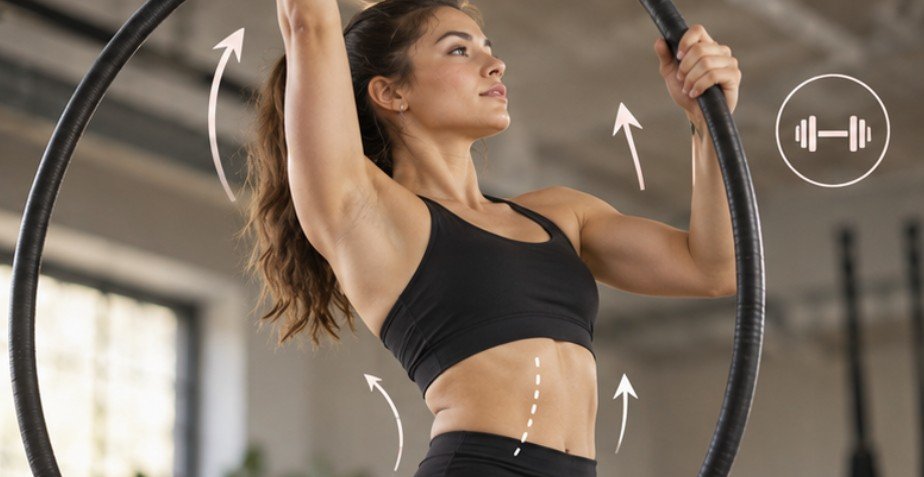
A beginner might practice pulling into a supported seat, maintaining shoulder engagement while hanging, lifting the legs toward the hoop, or controlling the body while the apparatus rotates. Your grip, upper back, shoulders, abdomen, and hip flexors may fatigue quickly.
That challenge is also part of lyra’s appeal. Students interested in building aerial-specific strength often enjoy seeing a previously difficult mount or pose become achievable after several classes.
Which One Builds More Strength?
For most true beginners, lyra puts a greater immediate demand on upper-body and core strength.
Aerial yoga can certainly strengthen the body. Stabilizing against moving fabric recruits the core, and supported lunges, planks, suspended movements, and balance exercises can become challenging.
But many aerial yoga classes divide their attention among stretching, mobility, breathing, balance, relaxation, and strength rather than making strength the primary objective.
The CDC recommends that US adults include muscle-strengthening activity on at least two days each week alongside aerobic activity. Aerial training may contribute to that goal depending on class intensity, but one class should not automatically be assumed to train every major muscle group sufficiently.
Which One Is Better for Flexibility and Mobility?
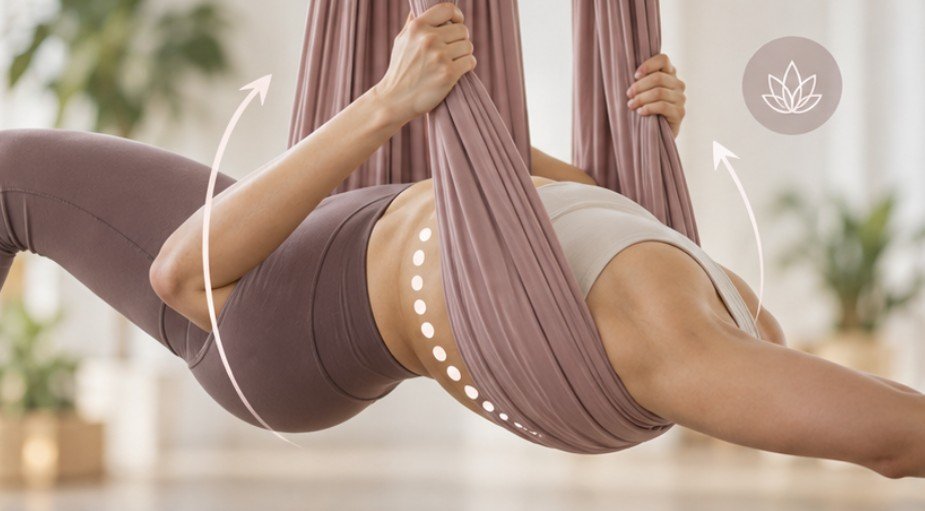
Aerial yoga usually gives flexibility and mobility more dedicated attention. The hammock can support body weight while students explore hip opening, hamstring length, shoulder movement, and spinal positioning. Because the fabric provides assistance, some students find it easier to relax into a controlled stretch.
That does not mean deeper is automatically better. Stretching should create manageable tension rather than sharp pain, numbness, or a feeling that a joint is being forced beyond control.
Harvard Health notes that yoga and similar movement practices can support mobility through flexibility, balance, and core-strength development.
Lyra also develops flexibility over time, especially as students progress into split-based shapes, backbends, and extended leg positions. However, substantial flexibility is not required to attend a properly designed introductory class.
What Should Your First Class Look Like?
A legitimate beginner lesson should teach more than attractive poses. Look for instruction on entering and exiting the apparatus, grip or fabric placement, safe body positioning, communication with the instructor, and how to recognize when a movement is beyond your current ability.
Students should not feel pressured to attempt dramatic inversions or drops simply because another beginner can perform them.
Ask the studio whether the class is genuinely designed for people with no aerial experience.
Preparing properly can also make the first session more comfortable, and knowing what to eat before aerial yoga can help you plan your food and energy around class.
You can also ask how instructors are trained, how equipment is inspected, and whether mats are used beneath elevated skills.
Avoid buying and installing aerial equipment at home simply because beginner movements look manageable. Safe aerial practice also depends on appropriate hardware, rigging, structural support, equipment inspection, and sufficient fall protection.
Regular equipment care is also important, and knowing how to clean an aerial yoga silk hammock at home can help you inspect and maintain the fabric between classes.
Who Should Get Extra Guidance Before Starting?
People with previous shoulder, wrist, back, hip, or neck injuries should discuss relevant limitations with their instructor and, when appropriate, a health professional.
Vertigo, uncontrolled blood pressure problems, certain eye conditions, recent surgery, and significant balance disorders may also change which aerial movements are appropriate.
Pregnancy deserves particular caution because balance, joint stability, and fall risk change as pregnancy progresses. The American College of Obstetricians and Gynecologists recommends avoiding activities with substantial fall risk and discussing exercise choices with an obstetric professional.
Aerial-specific movements should therefore be evaluated individually rather than treated as equivalent to ordinary prenatal yoga.
Beginners who want a gentler introduction can also explore aerial yoga for people over 50, where the focus is on supported movement, mobility, balance, and gradual progression.
Frequently Asked Questions
1. Is aerial yoga easier than lyra for beginners?
Usually. The hammock supports more body weight and generally demands less pulling strength. Individual classes vary, however, so instructor style and class level matter.
2. Do I need upper-body strength before trying lyra?
No. Beginner classes should build strength progressively, although basic pulling, hanging, and core-control tasks may feel challenging at first.
3. Does lyra hurt more than aerial yoga?
Typically, yes. The steel hoop concentrates pressure against the body, so tenderness and mild bruising are common during the early learning period.
4. Can an inflexible person try aerial yoga or lyra?
Yes. Neither discipline requires advanced flexibility for introductory skills. A good instructor modifies movements and develops mobility gradually instead of forcing range of motion.
A Better Way to Choose Your First Aerial Class
The important difference between aerial yoga vs lyra hoop for beginners is not which one looks harder. It is what kind of challenge makes you want to return next week.
Choose aerial yoga if you want supportive movement, stretching, balance work, and a calmer introduction to leaving the floor. Choose lyra if the idea of developing grip strength, learning acrobatic shapes, and eventually spinning inside a steel ring sounds exciting.
You do not have to choose permanently. Many aerialists eventually train on multiple apparatuses. Your first class only needs to accomplish one thing: give you a safe enough, enjoyable enough experience that you want to learn the next skill.