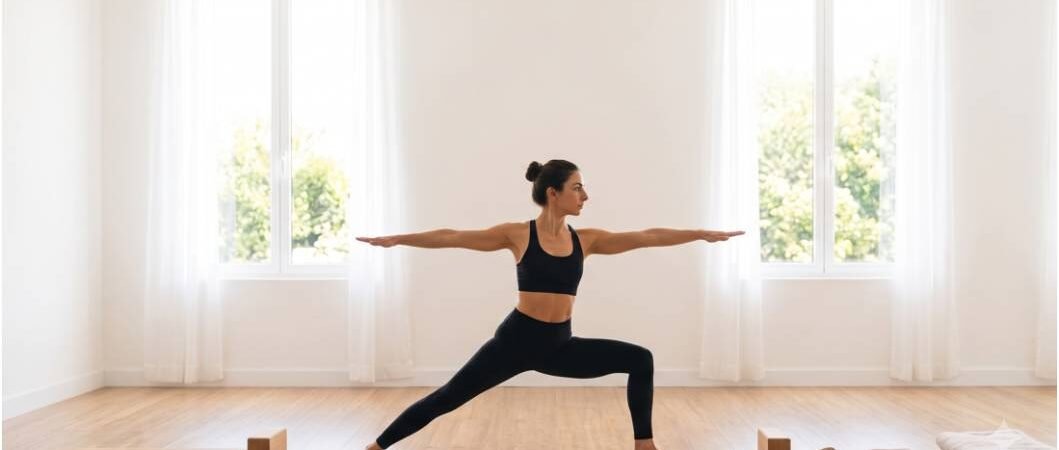
Stepping onto an Ashtanga mat for the first time feels like entering a furnace. When I started my Mysore practice a decade ago, the sheer volume of postures felt insurmountable. This ashtanga primary series sequence breakdown cuts through that overwhelm, mapping out all four chronological blocks so you can practice with precision and structural integrity.
Traditionally christened Yoga Chikitsa (Yoga Therapy), the Primary Series purifies the physical vessel, resets spinal alignment, and cleanses the internal organs through roughly 75 fixed postures.
The Core Engine: Tristhana and Internal Heat
The sequence is not a casual collection of shapes. It runs on Tristhana—three simultaneous anchors that transform physical exertion into moving meditation.
Ujjayi Breath and Nervous System Tone
Every movement links to an exact inhalation or exhalation. The gentle friction created at the back of the glottis produces the ocean-sounding Ujjayi breath. Research compiled by the National Center for Complementary and Integrative Health underscores how controlled, mindful respiration down-regulates sympathetic drive while elevating oxygen exchange during intense muscular work.
Bandhas and Drishti as Alignment Anchors
Mula Bandha (pelvic floor contraction) and Uddiyana Bandha (lower abdominal draw) act as internal weight belts. They decompress your lumbar spine during rapid transitions. Paired with Drishti—nine specific visual focal points—your awareness stays locked on the mat rather than drifting across the room.
Phase 1: The Opening Sequence
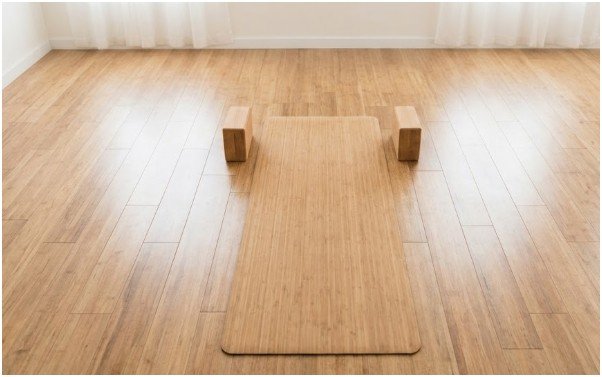
Every morning begins at the top of the mat in Samasthiti (Equal Standing Pose).
We start with five rounds of Surya Namaskar A, establishing an unbroken 9-vinyasa count. From there, we transition directly into three to five rounds of Surya Namaskar B.
Surya Namaskar B raises the stakes through 17 vinyasas, incorporating Utkatasana (Chair Pose) and Virabhadrasana I (Warrior I).
These rounds fire up the quadriceps, mobilize the ankles, and build tapas (purifying internal heat). If tight calf muscles restrict your heels during transitions, you can [use yoga blocks in downward dog] to elevate the floor and lengthen your spine safely.
Phase 2: Foundational Standing Poses
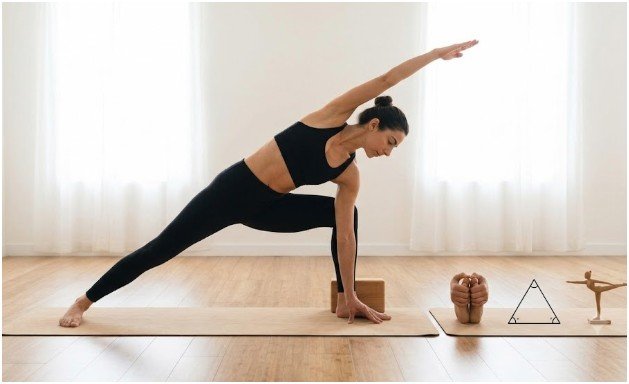
The standing series serves as the diagnostic phase of the practice. It exposes asymmetries between your left and right sides while building foundational stability.
We move systematically through forward folds like Padangusthasana and lateral openers such as Utthita Trikonasana (Triangle Pose) and Utthita Parsvakonasana (Side Angle). Each posture holds for five deep Ujjayi breaths.
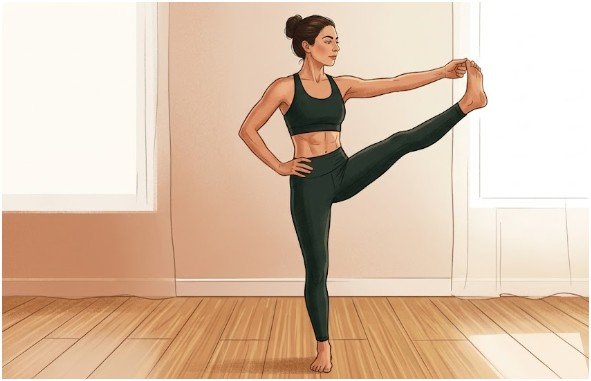
Next comes balancing work. Poses like Utthita Hasta Padangusthasana challenge balance and stability. This rigorous standing balance yoga work teaches the hip rotators and feet to stabilize under fatigue. The standing series finishes with Virabhadrasana II, which sets up the transition to the floor.
Phase 3: Seated Sequence and the Vinyasa Reset
The seated block constitutes the core work of Yoga Chikitsa. It demands patience and rigorous hamstring mobility.
We begin in Dandasana (Staff Pose) and progress immediately into deep forward extensions like Paschimottanasana. Between every single side of every seated posture, we execute a full or half vinyasa: jump back to Chaturanga, press through Upward Dog, glide back to Downward Dog, and jump forward to sit.
The sequence then challenges external hip rotation with the Janu Sirsasana (A, B, C) and Marichyasana (A through D) families. In my third year of practice, I repeatedly strained my sacroiliac joint by forcing twists before my pelvis was properly anchored.
Studies from Stanford Medicine show that aggressive forward spinal flexion with a posteriorly tilted pelvis puts severe pressure on the lumbar discs. If your hamstrings resist, bend your knees and keep your chest lifted rather than wrenching your forehead to your shins.
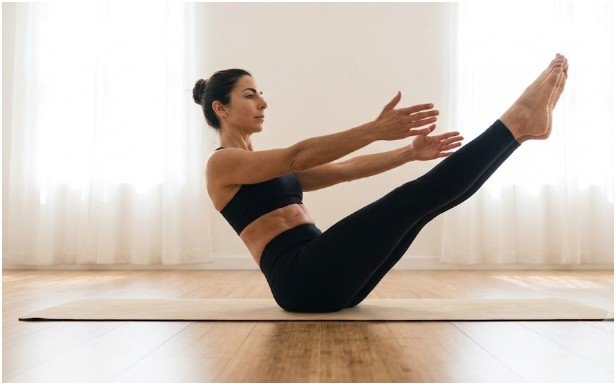
Dynamic strength peaks during Navasana (Boat Pose), held five times with lift-offs between sets, before advancing to arm balances like Bhujapidasana and Kurmasana (Tortoise Pose).
Phase 4: Finishing Postures and Nervous System Recovery
Skipping the closing sequence is the easiest way to leave your mat feeling jittery and depleted. The finishing block systematically downshifts the body from intense sympathetic activation into restorative parasympathetic recovery.
Backbends arrive first. We take three rounds of Urdhva Dhanurasana (Wheel Pose) or Bridge Pose to open the anterior chain, followed by a grounding seated forward fold.
Inversions then reverse venous blood flow. We hold Salamba Sarvangasana (Shoulderstand), Halasana (Plow Pose), and Karnapidasana (Ear Pressure Pose) before setting up for Sirsasana (Headstand). Guidelines from the Yoga Alliance stress that cervical spine protection requires actively pressing the forearms down, preventing weight from compressing the neck.
We close in Padmasana (Lotus Pose) with focused breathwork, followed by ten minutes of total surrender in Savasana.
Common Biomechanical Traps and Modifications
Aggressive postures should never sacrifice joint health. Here are adjustments that keep the sequence safe:
- The Knee Torque Danger: Poses like Ardha Baddha Padma Paschimottanasana (Half-Bound Lotus) require deep hip rotation. If your hips are stiff, that torque twists the knee joint. Substitute a seated figure-4 shape until your hip opens.
- Chaturanga Elbow Flaring: Keep your elbows pinned over your wrists at 90 degrees. Collapsing past 90 degrees shreds the anterior shoulder capsule. Lower your knees whenever fatigue breaks your form.
Frequently Asked Questions
1. How long does the full primary series take?
A full led or Mysore practice takes between 75 and 90 minutes.
2. Can beginners practice the Ashtanga Primary Series?
Beginners can practice by starting with the Sun Salutations, standing postures, and closing sequence.
3. How often should I practice Ashtanga yoga weekly?
The traditional lineage calls for practice six days a week with rest on moon days and Saturdays.
4. What is the main purpose of the Primary Series?
The sequence realigns the spine, detoxifies muscles, and builds mental focus through breath-synchronized movement.
Unroll, Breathe, Repeat: Your Next Move
The Ashtanga Primary Series is not an ego contest; it is a mirror reflecting how you respond to resistance. Stop worrying about whether your nose touches your knees or whether your legs twist into a clean lotus. Show up tomorrow, step onto the mat, commit to the five-count Ujjayi breath, and let the vinyasa do its work.