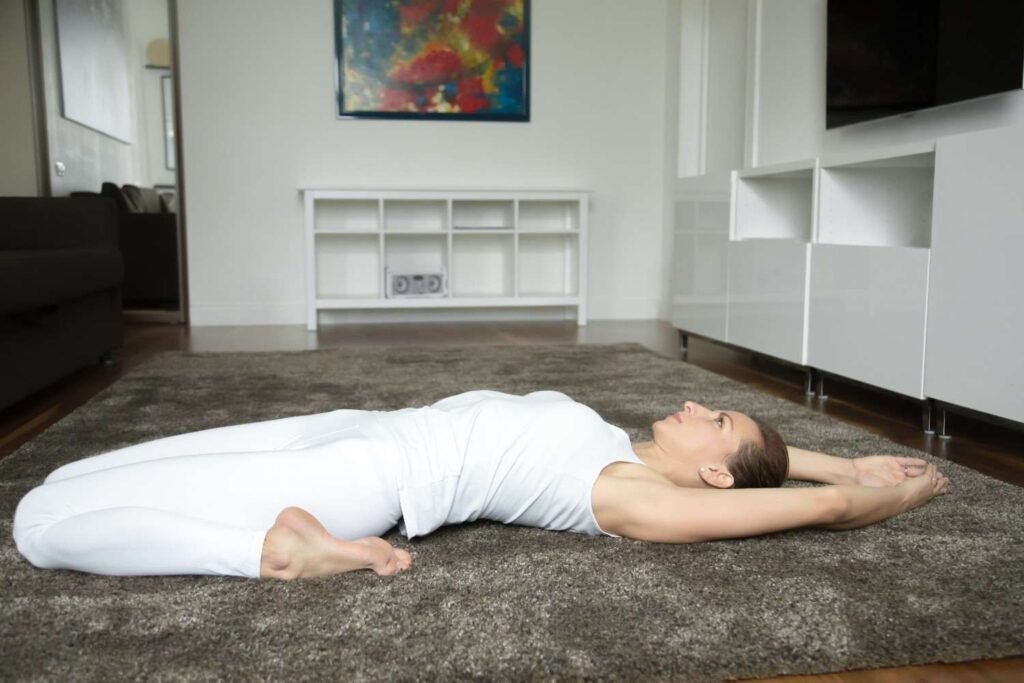
After a long day of work, commuting, exercise, or family responsibilities, I often notice my mind slows down before my body does. My jaw may stay clenched, and my shoulders lifted. That is why I find body scan Yoga Nidra for releasing physical tension useful: it guides attention through the body while allowing tight areas to soften without force.
Yoga Nidra, often called yogic sleep, is a guided relaxation practice performed while the body rests. A central technique is the rotation of consciousness, where awareness moves systematically through specific body parts. Unlike a casual body scan meditation, you notice warmth, heaviness, tingling, tightness, or neutrality, then continue. This supports body awareness, breath awareness, deep relaxation, and a calmer transition into rest.
How Does a Yoga Nidra Body Scan Help With Physical Tension?
Muscle tension often builds gradually. Desk work can tighten the jaw, neck, shoulders, wrists, and lower back, while driving, shift work, or exercise may leave other areas feeling braced.
A Yoga Nidra body scan helps you notice these patterns through interoception, or awareness of internal sensations. Instead of ordering a muscle to relax, you first observe it. Research is still developing, but studies suggest possible benefits for relaxation, sleep, stress management, and pain-related experiences. It should not replace medical care.
How Should I Prepare for Yoga Nidra at Home?
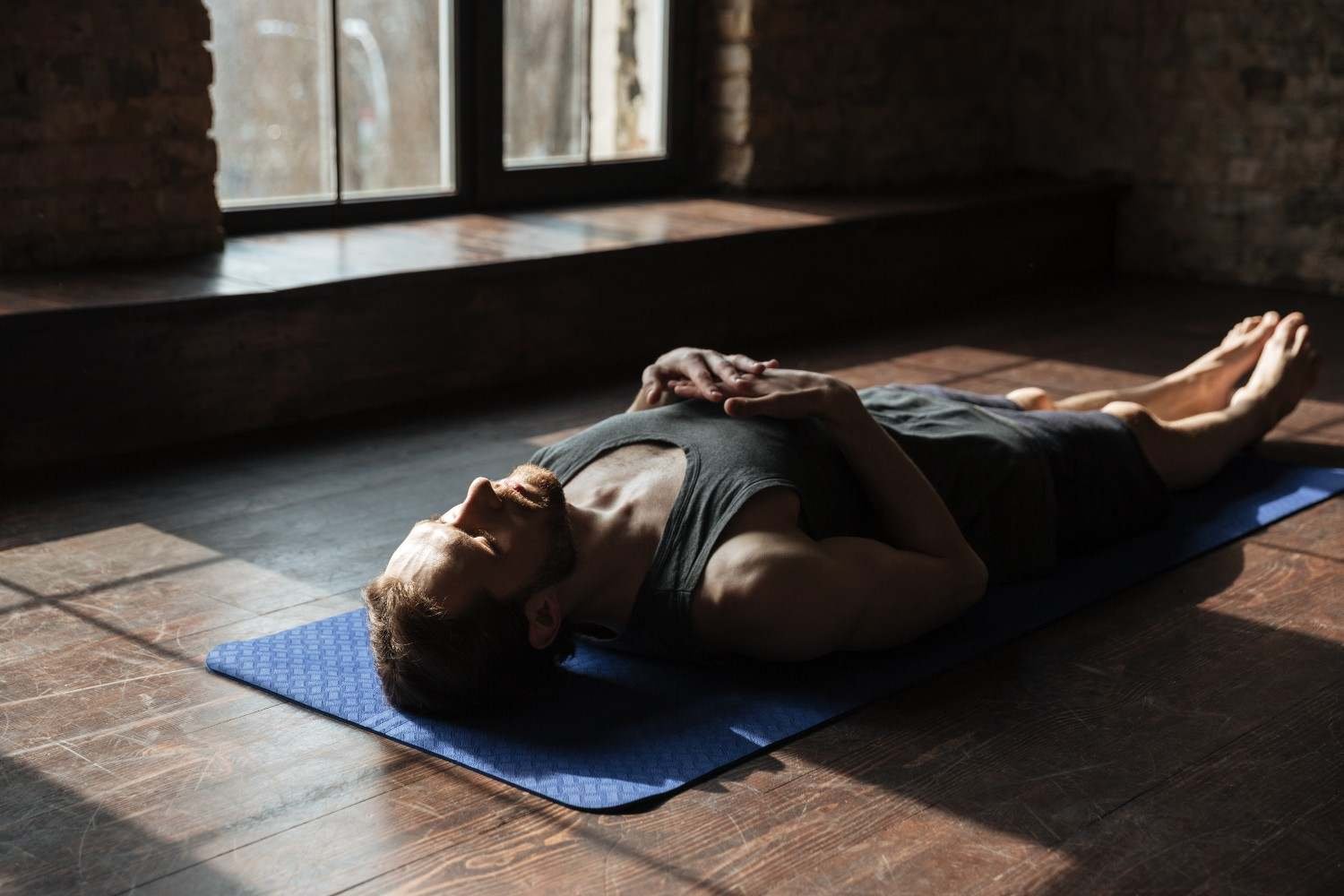
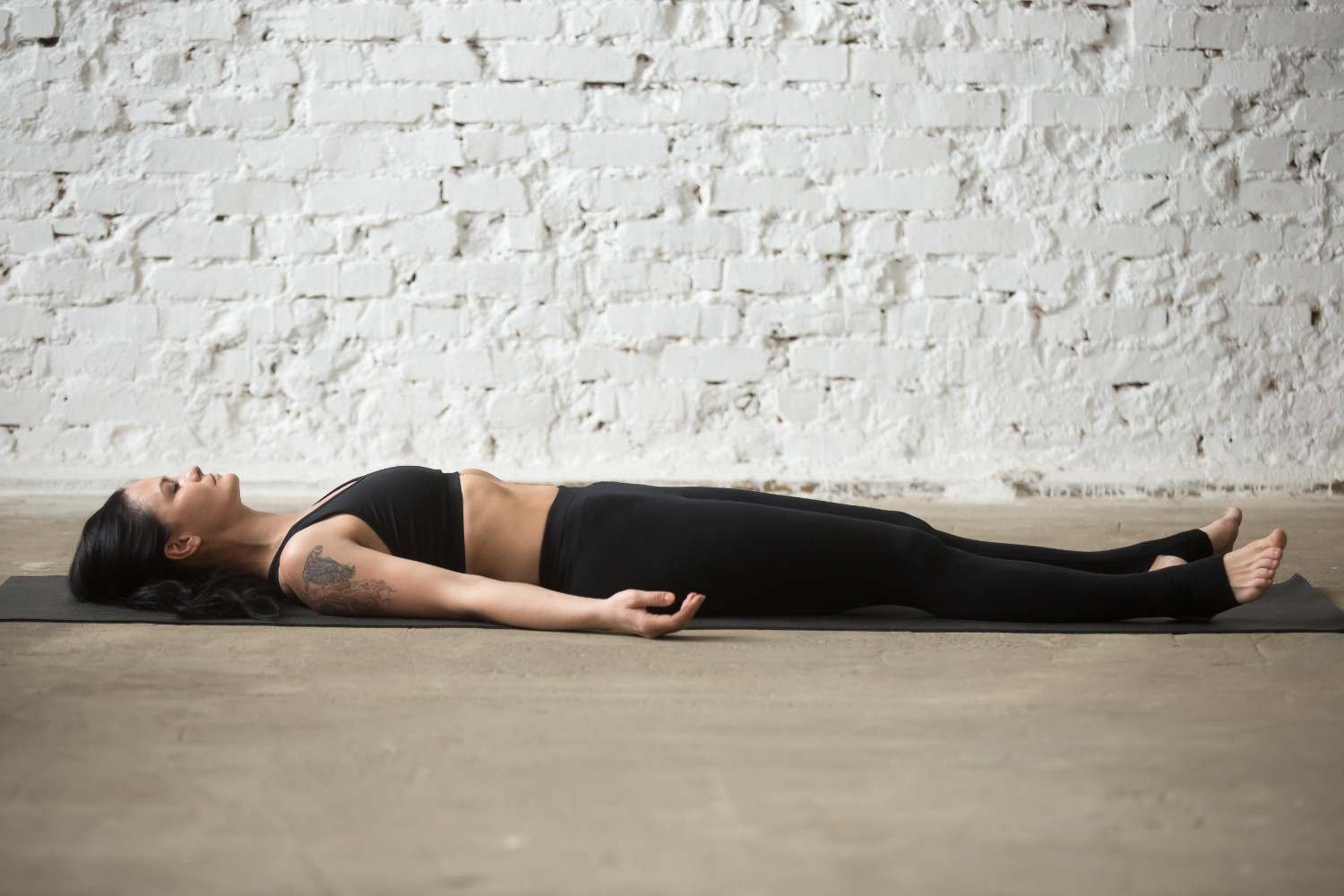
Lie on your back in Shavasana, or Corpse Pose, with your feet comfortably apart and arms slightly away from your sides, palms facing up. If your lower back feels tense, place a bolster or pillow under your knees. A thin pillow under your head can also help.
Keep a blanket nearby, dim the lights, and silence notifications. Close your eyes and think, “I am practicing Yoga Nidra. I will remain awake and aware.” A Sankalpa, or short personal intention, is optional.
What Breathing Technique Should I Use Before the Body Scan?
Take a comfortable breath through your nose and exhale slowly, letting your chest and abdomen settle. Repeat if it feels natural, then return to easy breathing.
If you feel keyed up, gently squeeze your fists, tighten your thighs, and scrunch your face for about three seconds, then release. This tense-to-release step is optional and should never cause strain.
How Do I Practice the Rotation of Consciousness?
Move steadily and spend only a few seconds on each point. Do not move the body part or force it to relax.
How Do I Scan the Right and Left Sides?
Start on the right side: thumb, index finger, middle finger, ring finger, little finger, palm, back of the hand, wrist, forearm, elbow, upper arm, shoulder, armpit, waist, hip, thigh, knee, calf, ankle, heel, sole, top of the foot, big toe, second toe, third toe, fourth toe, and fifth toe.
Repeat the same pathway on the left. Notice warmth, pressure, tingling, heaviness, tightness, or no obvious sensation, then continue.
How Do I Scan the Back and Front of the Body?
Move through the heels, calves, backs of the thighs, glutes, lower back, middle back, upper back, shoulder blades, spine, back of the neck, and back of the head.
Then move to the crown, forehead, eyebrows, space between the brows, eyes, ears, cheeks, nose, lips, tongue, jaw, throat, collarbones, chest, upper abdomen, navel, lower belly, and pelvic floor. If your teeth are pressed together, let the jaw soften naturally.
What Happens During Whole-Body Integration?
Bring awareness to the entire right leg, then the left, and then both legs together. Notice the right arm, left arm, and both arms together. Continue with the torso, neck, head, and finally the whole physical body.
You can also explore opposites. Imagine the body becoming pleasantly heavy and fully supported, then imagine lightness or weightlessness. This traditional contrast can deepen mind-body relaxation without forcing a particular sensation.
What If My Mind Wanders or I Fall Asleep?
If your mind wanders, return to the guide’s voice or continue with the next body part you remember. You do not need to restart.
Falling asleep is common. To stay aware, practice earlier or use a mat instead of your bed.
How Do I Finish Yoga Nidra Without Feeling Groggy?
Notice your breathing, your clothes against your skin, the room temperature, and the surface supporting you. Begin moving your fingers and toes, stretch gently, and open your eyes when you feel oriented.
If you experience persistent pain, numbness, dizziness, or another concerning symptom, stop and seek appropriate medical guidance.
When Is the Best Time to Practice for Deep Rest?
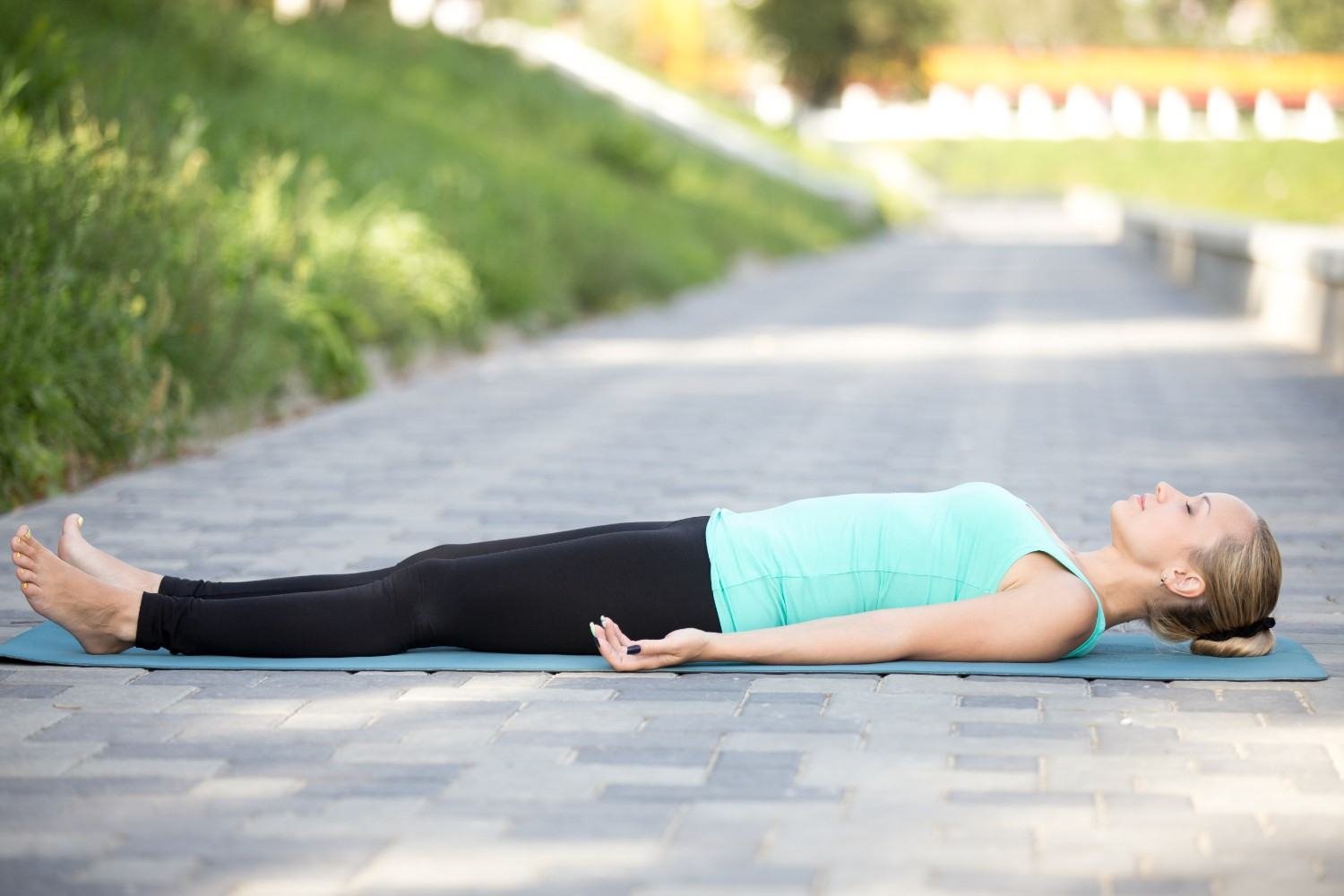
For many US adults, good transition points include after work, after a commute, following exercise, or before an evening wind-down. A 10- to 15-minute guided relaxation can fit a busy weekday; 20 to 30 minutes works when you have more time.
Frequently Asked Questions (FAQs)
1. Is body scan Yoga Nidra for releasing physical tension Suitable for Beginners?
Yes. Beginners can follow a short guided practice without yoga flexibility or meditation experience. Comfort and awareness matter more than performing the sequence perfectly.
2. Is Yoga Nidra the Same as Body Scan Meditation?
They overlap, but Yoga Nidra often includes rotation of consciousness, breath awareness, whole-body integration, contrasting sensations, visualization, or intention setting.
3. Should I Consciously Relax Every Muscle?
No. Notice the area first. If it softens, let it soften. If it stays tight, continue without fighting the sensation.
4. Can I Practice After Exercise?
Yes, if you can rest comfortably. It can help you notice fatigue and lingering physical tension, but it should not replace injury care or proper recovery.
A Calmer Way to End a Busy Day
I like Yoga Nidra because it replaces the demand to “relax now” with something simpler: notice, breathe, and move awareness through the body. It can also work well as an evening meditation for switching off your day, helping create a smoother transition from activity into deep rest and greater body awareness.



One thought on “Body Scan Yoga Nidra for Releasing Physical Tension: A Head-to-Toe Reset”