
The biggest clothing mistake in aerial yoga is dressing as though it were an ordinary mat class. A loose T-shirt may feel perfectly comfortable in downward dog, but once the hammock lifts your hips and you turn upside down, that same shirt can slide toward your face.
That is why what to wear to aerial yoga comes down to three priorities: coverage, secure fit, and smooth fabric. Full-length leggings and a fitted top are usually the safest starting combination. The goal is not to look like an aerial performer. It is to keep skin protected, clothing controlled, and the hammock free from anything that could snag it.
Why Your Aerial Yoga Outfit Matters More Than You Might Expect
Traditional yoga mainly involves contact between your body and a mat. Aerial yoga adds a suspended fabric hammock that may wrap around your hips, thighs, back, arms, or legs.
That changes what makes an outfit comfortable.
Fabric pressing firmly into bare skin can create uncomfortable friction, particularly behind the knees, around the waist, and near the armpits. Loose clothing can twist or shift as the body rotates. Hardware such as exposed zippers may also come into contact with the hammock.
General exercise guidance from MedlinePlus similarly recommends choosing clothing according to the activity and notes that exercise clothes should allow free movement without catching on equipment.
For aerial yoga, that principle becomes especially important because the fabric is part support system, part exercise equipment.
The Best Aerial Yoga Outfit for Most Beginners
You do not need expensive aerial-specific clothing for your first class. Most people already own something suitable.
Start With Full-Length, High-Waisted Leggings
Full-length leggings provide a useful barrier between your skin and the hammock. High-waisted styles are particularly practical because they are less likely to roll down when the fabric supports your waist or pelvis. They also provide more coverage during inversions.
Look for leggings that stretch easily through deep hip and knee movement but remain close to the body. Before class, perform a squat, forward fold, and high knee lift. If the waistband rolls, the fabric becomes transparent, or the seams restrict movement, choose another pair.
Three-quarter leggings can work, but exposed calves or the backs of the knees may encounter more fabric friction. These are applicable for persons interested in plus size aerial yoga for beginners.
Choose a Top That Passes the Upside-Down Test
A fitted athletic shirt, tank, bodysuit, or tucked-in top generally works better than an oversized tee. Here is an easy test: raise both arms overhead, bend forward, and imagine your hips above your shoulders. If the shirt immediately falls toward your head or exposes your torso, it will probably move even more during an inversion.
A longer fitted top can provide extra coverage around the waist. Some students prefer shirts with sleeves because hammock positions occasionally place fabric near the underarms.
A one-piece unitard is another option. It eliminates waistband gaps and shirt movement, although it is certainly not necessary for a beginner.
Use Fabric That Handles Sweat Without Becoming Slippery
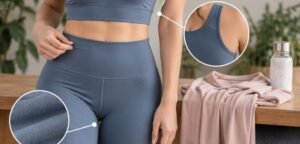
Exercise clothing should manage heat and moisture as well as movement. MedlinePlus recommends quick-drying, sweat-wicking materials such as polyester or polypropylene for exercise. The American Academy of Dermatology also notes that moisture-wicking fabrics can move sweat away from the skin and dry quickly.
That matters during aerial yoga because damp fabric can become uncomfortable where the hammock presses against the body.
Cotton is not automatically wrong. For a gentle beginner class, a fitted cotton-blend shirt may be perfectly comfortable. However, cotton tends to retain moisture longer than technical workout fabrics, so people who sweat heavily may prefer a quick-drying alternative.
A Simple Outfit Checklist Before Leaving Home
| Clothing choice | Good option | Better to avoid |
| Bottoms | Full-length fitted leggings | Loose shorts |
| Top | Fitted tee, tank, bodysuit | Oversized shirt |
| Fabric | Stretchy, smooth, moisture-wicking | Rough or heavily textured fabric |
| Hardware | Minimal or none | Exposed zippers, buckles, hooks |
| Accessories | Hair tie if needed | Rings, necklaces, bracelets |
| Extra layer | Lightweight long sleeve | Bulky sweatshirt during hammock work |
A useful rule is simple: if an item can slide, scratch, snag, or expose more skin when you turn upside down, reconsider it.
What Not to Wear to Aerial Yoga

Avoid Zippers, Buckles, and Decorative Hardware
The hammock needs a smooth surface to move across. Exposed zippers, metal decorations, sharp fasteners, hook-and-loop closures, or projecting drawstring hardware can potentially snag delicate fabric. Even if a studio uses durable aerial equipment, protecting that equipment is part of responsible class etiquette.
Check the back of your leggings as carefully as the front. Small ankle zippers and rear waistband pockets are easy to overlook.
Take Off Jewelry Before Class
Remove necklaces, bracelets, dangling earrings, watches, and rings unless the studio explicitly allows particular items.
The issue is not fashion. Jewelry introduces hard edges that can catch fabric or press uncomfortably against the body.
Stud earrings may be acceptable at some studios, but individual policies differ. Checking the studio’s rules before your first visit is the safest approach.
Skip Very Loose Shorts
Loose running shorts may feel ideal for another workout, but they provide little protection where the hammock wraps around your thighs. They can also shift during inversions.
If shorts are your only comfortable option, fitted cycling-style shorts provide more control than loose gym shorts, although full-length leggings generally offer greater skin coverage.
Do You Wear Shoes or Socks?
Most aerial yoga classes are performed barefoot. Bare feet allow instructors to see foot position and make it easier to grip, point, flex, or wrap the feet appropriately. Shoes can also introduce rough surfaces or dirt to the hammock.
Policies on socks vary. Regular socks may feel slippery, while grip socks may be accepted by some studios. Check before class rather than assuming. Bring clean socks for before and after practice if the studio floor is cool.
Bring One Extra Layer
A fitted long-sleeve shirt can be surprisingly useful. You may not need it while moving, but studios can feel cool during warmups, instruction periods, or the final relaxation portion of class. Long sleeves can also provide extra skin coverage while you become accustomed to pressure from the hammock.
Layering is a practical exercise strategy because it allows clothing to change with body temperature rather than forcing one outfit to work for an entire session.
Clothing Cannot Replace Aerial Yoga Safety

The right outfit improves comfort, but it does not make every aerial movement appropriate for every person. This is taught by the instructor since/ at your first aerial yoga class.
The National Center for Complementary and Integrative Health says yoga is generally considered safe for healthy people when practiced properly with qualified instruction, while noting that sprains and strains are among the most common injuries. Its yoga safety guidance recommends that beginners avoid extreme practices and that people with certain medical conditions discuss modifications with healthcare professionals.
Harvard’s Yoga for Exercise resource also discusses additional considerations surrounding inverted positions, including concerns for some people with glaucoma.
Pregnancy deserves particular attention. The American College of Obstetricians and Gynecologists recommends discussing exercise with an ob-gyn and notes that activities may need modification as balance and other physiological factors change. Aerial practice introduces additional fall and inversion considerations beyond ordinary prenatal yoga, so studio and medical guidance should come before outfit decisions.
Frequently Asked Questions
1. Can I wear regular yoga leggings to aerial yoga?
Yes. Regular full-length yoga leggings are usually suitable if they are stretchy, fitted, opaque, and free from exposed zippers or other hardware.
2. Can I wear a sports bra without a shirt?
Studio policies vary, but additional torso and underarm coverage can reduce direct skin contact with the hammock. A fitted shirt is often more comfortable for beginners.
3. What shoes should I wear to aerial yoga?
Aerial yoga is generally practiced barefoot. Wear ordinary shoes to the studio, then remove them before entering the hammock unless your instructor says otherwise.
4. Why does what to wear to aerial yoga matter so much?
Your clothing interacts directly with suspended fabric. Secure, smooth, fitted clothing helps reduce shifting, uncomfortable friction, exposed skin, and objects that may catch on the hammock.
The Takeaway
The ideal aerial yoga outfit is far simpler than social media can make it appear. You do not need a specialized wardrobe or an expensive unitard before taking your first class.
Start with full-length high-waisted leggings, a fitted top, smooth stretchy fabric, and no jewelry or sharp hardware. Add a light long-sleeve layer to your bag and check the studio’s rules on socks and other details.
Most importantly, dress for what the hammock will do—not just for how you look standing in front of a mirror. If your clothing stays comfortable, covered, and secure upside down, you have probably chosen well.