
Even when my schedule finally slows down, my mind does not always follow. I may close my laptop, finish dinner, or put my phone aside, yet part of me is still replaying conversations, planning tomorrow, and carrying the tension of the day into the evening.
That is why Yoga Nidra for building a sustainable rest practice has become more meaningful to me than simply waiting until I feel completely exhausted. Instead of using rest as a last-minute response to stress, I can make it part of my normal routine.
Because Yoga Nidra is usually practiced lying down with guided instructions, it gives me a simple way to step away from constant stimulation, settle my attention, and create a more intentional pause before burnout becomes the reason I finally stop.
Why Can Yoga Nidra Support a Sustainable Rest Routine?
When I am mentally depleted, a demanding meditation session can feel like another task. Yoga Nidra asks me to get comfortable, listen, and follow the guidance with little or no movement.
It is often discussed alongside non-sleep deep rest, or NSDR. Yoga Nidra comes from a yogic tradition and may include body awareness, breath attention, intention, sensation, and visualization. NSDR is a broader modern term used for guided practices intended to encourage deep relaxation without ordinary sleep.
Yoga Nidra is also discussed in relation to the autonomic nervous system. The practice may help reduce stress-related arousal and support parasympathetic, or “rest-and-digest,” activity. Some discussions describe shifts toward alpha and theta brain activity during deep relaxation, but I would not equate those changes with getting several hours of actual deep sleep.
Research is encouraging, but I would not exaggerate it. Studies have reported promising sleep-related improvements while also noting limitations such as small sample sizes and methodological differences. Research has also examined Yoga Nidra for stress and anxiety. I treat it as supportive relaxation, not a replacement for medical care or adequate sleep.
What Happens During a Yoga Nidra Practice?
How Should I Set Up?
I make comfort non-negotiable. Traditionally, Yoga Nidra is practiced in Savasana, or corpse pose, but I can also lie on a bed or another supportive surface. A pillow under my head or knees and a light blanket can help me settle without constantly adjusting.
What Is a Sankalpa?
A sankalpa is a short positive intention used in many Yoga Nidra traditions. I might choose something simple such as “I allow myself to rest,” “I am calm,” or “I am resting deeply.”
Why Does Yoga Nidra Use a Body Scan?
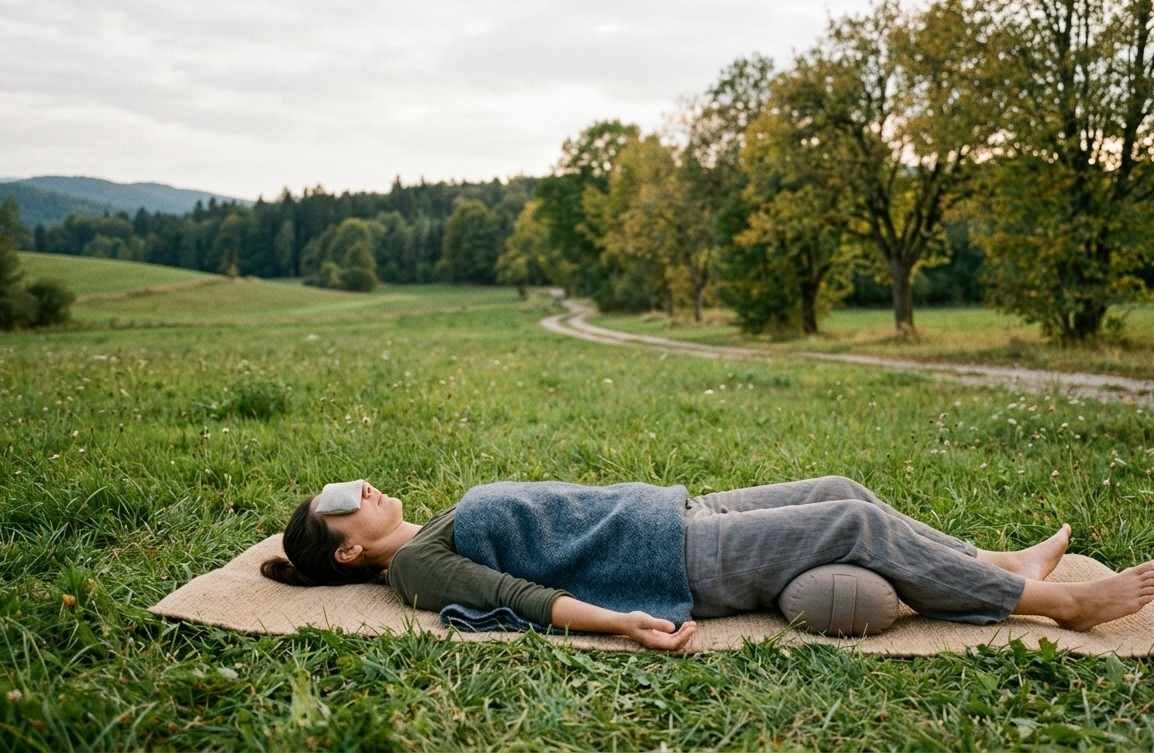
During the rotation of awareness, a guide directs my attention through different body areas without asking me to move. I may notice my fingers, hands, arms, face, torso, and legs in sequence. This body scan gives a restless mind something specific to follow while tension can soften.
How Are Breath, Sensation, and Visualization Used?
A practice may ask me to count my breaths backward, notice opposite sensations such as heaviness and lightness or warmth and coolness, and then follow a series of mental images.
Some sessions use calming landscapes, a candle flame, clouds, rain, or other rapid visualizations. The structure varies, which is why beginners often find a guided Yoga Nidra recording easier than trying to remember every stage.
How Long Should a Yoga Nidra Session Be?
I prefer a short practice I can repeat to an ambitious one I keep postponing.
Ten to 20 minutes is a practical starting range for many beginners. A 15-minute nervous system reset after work may fit a normal weekday much better than a 45-minute session.
Yoga Nidra for building a sustainable rest practice should fit my real schedule, not an idealized one. With repetition, even lying down, dimming the lights, and starting a familiar recording can become cues that it is time to stop working and rest.
When Is the Best Time to Practice Yoga Nidra?
A short morning session can create a calmer start before email and meetings. A midday practice can provide a screen-free pause during lunch. An after-work session can create a clear transition between professional responsibilities and home life.
Bedtime is another natural anchor. I can begin after brushing my teeth, dimming the lights, or putting my phone away. Attaching Yoga Nidra to something I already do each day makes consistency easier than relying on motivation.
What If I Fall Asleep During Yoga Nidra?
Falling asleep is common, especially when I am exhausted or practicing in bed. I do not treat it as failure.
If staying aware matters to me, I can practice earlier in the day, use a slightly firmer surface, or select a shorter guided meditation.
I would avoid claiming that every instruction continues to be processed after I fall asleep. The more useful takeaway is that drifting off happens, and frequent exhaustion may mean I need more actual sleep as well as intentional relaxation.
How Can I Make Yoga Nidra a Habit I Will Keep?
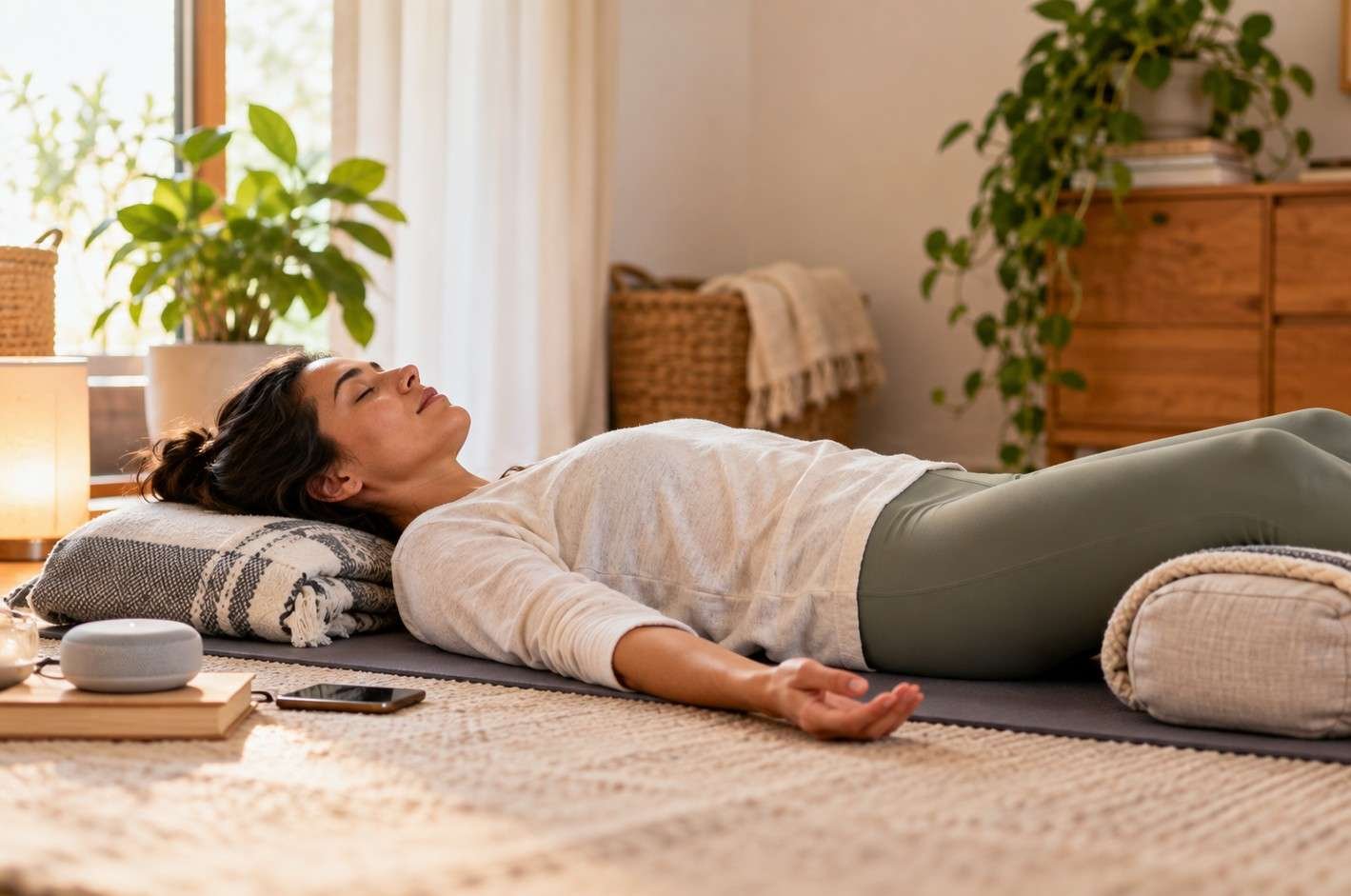
I start with a minimum viable routine: one familiar recording, one comfortable place, and two or three sessions each week. Consistency matters far more to me than immediately attempting daily 45-minute practices.
I also do not need an expensive meditation subscription. Free Yoga Nidra sessions are available through platforms such as Insight Timer and YouTube. Teachers including Ally Boothroyd and Tanis Fishman also offer guided deep-rest practices in different styles.
Once I find a voice and pace that help me relax, I prefer to stay with them instead of searching for a “perfect” recording every night.
If I miss a session, I simply return at the next realistic opportunity instead of deciding the routine has failed.
Can Yoga Nidra Replace Sleep?
No. Yoga Nidra can support deep relaxation, but it does not replace the biological functions of normal sleep. The practice can also highlight the importance of body awareness, since noticing physical sensations without forcing change may help me settle more fully into rest.
Claims suggesting that 20 or 30 minutes of Yoga Nidra automatically equals several hours of sleep should therefore be treated cautiously.
For persistent insomnia or severe daytime sleepiness, I would talk with a healthcare professional.
Frequently Asked Questions (FAQs)
Can Beginners Practice Yoga Nidra Every Day?
Yes, many beginners can practice daily if it feels comfortable, but daily practice is not required. Two or three sessions may be a more sustainable start.
Is 10 Minutes of Yoga Nidra Enough?
A 10-minute guided practice can still create a deliberate break from stimulation, especially during lunch, after work, or before bed.
Do I Need Special Equipment for Yoga Nidra?
No. I only need a comfortable place to lie down and, if useful, a pillow, blanket, or headphones.
Is Yoga Nidra the Same as Meditation?
Yoga Nidra is a structured guided meditative practice, but it differs from many seated meditation styles because it is commonly performed lying down and follows a deliberate sequence of awareness.
A Better Way to Think About Rest
I no longer want rest to begin only when my body forces me to stop. A sustainable routine makes recovery an ordinary part of my week instead of an emergency response.
For me, Yoga Nidra for building a sustainable rest practice works best when I keep it simple: a comfortable place, a familiar guided recording, a realistic duration, and a dependable cue such as the end of the workday.
I do not need perfect stillness or a special meditative experience. I only need to keep making room for rest before e